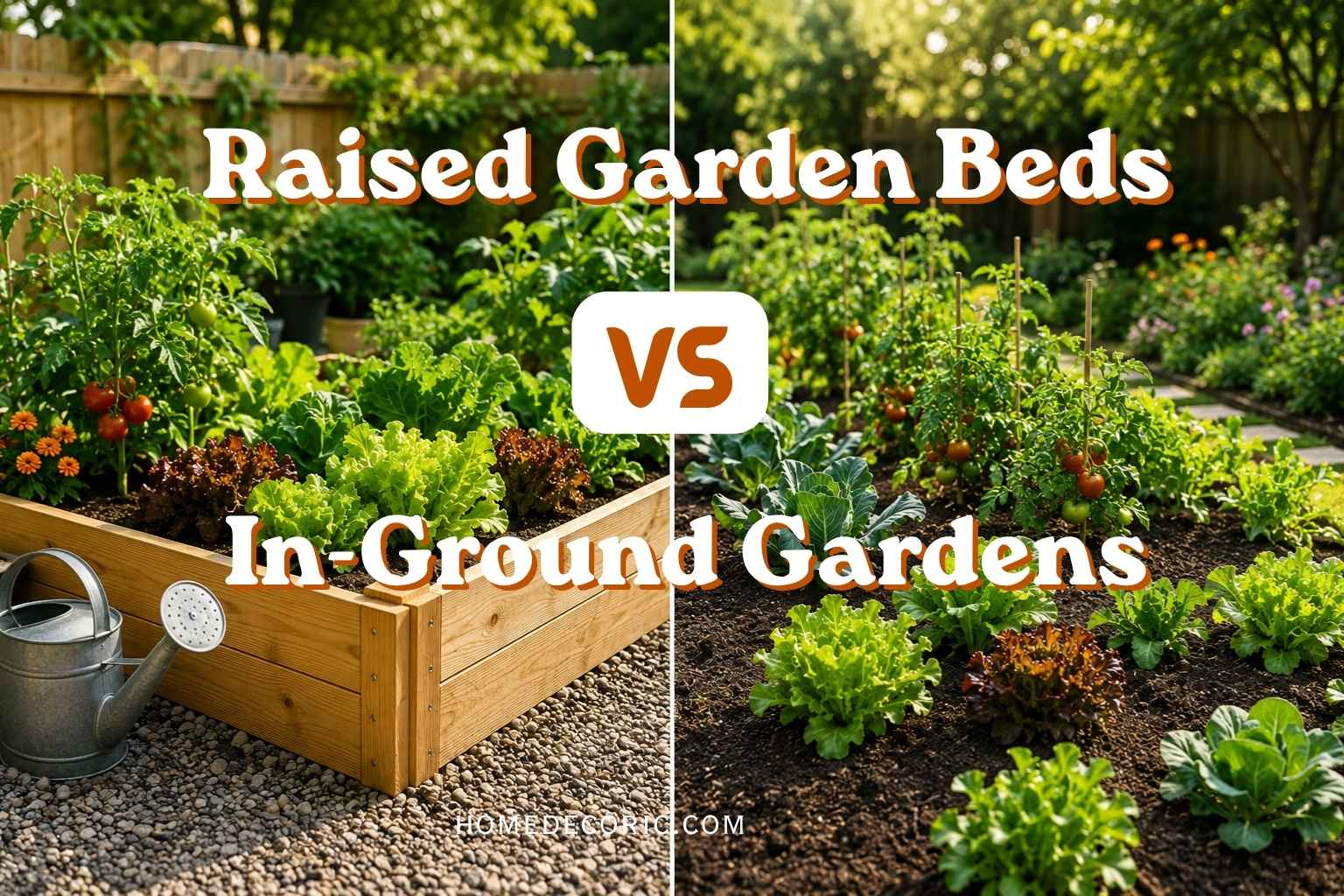
Raised Garden Beds vs. In-Ground Gardens: Which Is Better for Beginners?
If you’re planning your first garden, you’ve probably hit this decision early: do you build a raised bed or dig a hole?
It’s one of the most common questions new gardeners ask, and the answer actually depends on your soil, your budget, and how quickly you want to see results.
For most beginners, raised garden beds have the edge. They give you immediate control over soil quality, drain better, and are easier to manage physically.
But in-ground gardens are cheaper to start and scale more naturally for larger growing spaces. Knowing the tradeoff before you start saves you time, money, and a lot of frustration in your first season.
Why the Garden Setup You Choose Matters More Than You Think
Most beginners focus on what to plant. The smarter question is how to set up your growing space because the wrong setup can undermine even the best seeds and the most committed gardener.
Soil compaction, poor drainage, weed pressure, and back-breaking maintenance can kill enthusiasm fast.
The structure you choose, raised bed or in-ground, shapes all of these from day one. Getting it right means you’re more likely to stick with it, see results, and actually enjoy the process.

What Is a Raised Garden Bed?
A raised garden bed is a contained planting area built above the natural ground level, typically framed with wood, metal, or composite materials.
You fill it with a custom soil mix, usually a combination of topsoil, compost, and amendments, and plant directly into that controlled environment.
Raised beds range from simple 4×8-foot wooden frames to elaborate tiered systems with built-in irrigation.
You can buy kits, build your own, or use galvanized steel troughs. Heights typically range from 6 to 24 inches, with 12 inches the sweet spot for most vegetables.
What Is an In-Ground Garden?
An in-ground garden is exactly what it sounds like: you dig into the native soil in your yard and plant directly into it. It’s the traditional approach, the way gardening has been done for centuries.
You may amend the soil with compost or fertilizer, but you’re ultimately working with what’s already there.
In-ground gardens can be any shape or size and integrate naturally into the landscape without the need for building materials or soil.
Raised Beds vs. In-Ground: A Head-to-Head Breakdown
Soil Quality and Control
This is where raised beds win decisively for beginners. When you fill a raised bed, you know exactly what’s going into the ground. You choose a high-quality mix, and your plants get off to an ideal start from day one.
In-ground gardens depend heavily on your native soil. If your yard has clay, compaction, or poor drainage, which is common, you’ll spend your first season (or two) amending and improving it before you see consistent results.
Getting a soil test before starting an in-ground garden is strongly recommended, but even then, fixing native soil takes patience.
Drainage
Raised beds drain well by design. Because they sit above grade and use loose, amended fill, water moves through freely.
This matters most in spring, when saturated soil can rot roots before plants even establish.
In-ground gardens are prone to pooling in heavy rain and staying wet longer, especially in clay-heavy or low-lying areas. Poor drainage is one of the top reasons beginner gardens fail.
Weed Pressure
Raised beds dramatically reduce weeds in the first few seasons. Because you’re not working with native soil, you start with a clean slate. Weed seeds that do blow in are much easier to pull from loose, loamy raised bed soil.
In-ground gardens pull weeds up from below, seeds already in the native soil, and weeding is more physically demanding when the soil is compacted.
Landscape fabric and mulch help, but you’ll still spend significantly more time managing weeds than you would in a raised bed.
Cost to Start
In-ground wins here, and it’s not close. Digging a garden bed costs little beyond your time and a few basic tools. If your soil is decent, your startup cost might be under $50.
A raised bed setup is a real investment. A quality 4×8 cedar frame runs $80–$200 on its own. Then you need to fill it.
A typical 4x8x12-inch bed requires roughly 8 cubic feet of soil mix, which can cost $50–$150 depending on your source.
You’re looking at $150–$400 to plant a single raised bed. Scale that up across multiple beds, and the cost adds up fast.
Physical Accessibility
Raised beds are significantly easier on your body. Working at a 12–18 inch height means far less bending, kneeling, and crouching.
For gardeners with back pain, mobility issues, or anyone who finds traditional gardening physically taxing, this alone makes raised beds worth it.
In-ground gardening requires you to get down to ground level repeatedly. Over a full growing season, that adds up, especially during intensive planting and harvesting periods.
Scalability
In-ground gardens scale more easily. Once you’ve established and improved your soil, adding square footage is simple and cheap. There’s no material cost per square foot, unlike with raised beds.
Raised beds scale well, too, but each new bed is another investment in materials and fill soil.
If you’re planning a large garden, think 200+ square feet in-ground will almost always be more economical in the long run.
Season Length
Raised beds warm up faster in spring because the soil mass heats from all sides, not just the top.
This gives you a 2–3 week head start in cooler climates, which is meaningful if you’re trying to squeeze in a spring crop before summer heat arrives.
In-ground soil warms more slowly, and in cold climates, you may lose planting windows you’d otherwise have with a raised bed.
Which Should You Actually Start With?
If you have a limited budget and decent native soil, start in-ground. Amend it with a few bags of compost, get a soil test through your local Cooperative Extension Service, and grow. You’ll save money and learn a lot about working with what you have.
If your soil is poor, you have physical limitations, or you want the fastest path to a productive first season, go with a raised bed.
The upfront cost is real, but so is the advantage: better drainage, easier weeding, and soil you control from the start.
Many experienced gardeners use both. Raised beds for high-value crops like tomatoes, peppers, and herbs where soil quality matters most.
In-ground space for sprawling plants like squash, melons, and corn that need more room to roam.
Practical Examples to Help You Decide
Small urban backyard with compacted clay soil: Go raised bed. Amending clay at scale is a multi-year project. A 4×8 bed lets you grow productively this season without fighting the ground.
Large rural property with sandy or loamy native soil: In-ground makes sense. Your soil is already workable; use it.
Renter or someone who might move: Raised beds are portable (sort of). Metal or modular wooden frames can be disassembled and moved. In-ground gardens stay with the property.
Gardener with back problems or physical limitations: Raised bed, no question. Elevated height changes the experience entirely.
Tight budget, want to grow a lot: In-ground. Build raised beds over time as budget allows, starting with one or two for your highest-value crops.
Frequently Asked Questions
Is a raised garden bed better for vegetables than planting in the ground?
For most beginners, yes, especially if your native soil is poor. Raised beds give you immediate control over soil quality and drainage, which are the two biggest variables affecting vegetable yields. In good native soil, in-ground gardens produce just as well and at a lower cost.
How deep does a raised garden bed need to be for vegetables?
Most vegetables do well with 12 inches of depth. Root crops like carrots and parsnips prefer 18 inches of spacing.
Shallow-rooted crops like lettuce and herbs can get by with 6–8 inches of depth. When in doubt, go 12 inches; it’s the most versatile depth for a mixed vegetable garden.
Can you convert an in-ground garden to a raised bed later?
Yes, and many gardeners do exactly this. You can frame over an existing in-ground bed and add fill soil on top, a technique called “lasagna gardening” or sheet mulching. It improves drainage, adds growing depth, and reduces weeding without removing the existing soil.
What’s the best soil mix for a raised garden bed?
A common and effective mix is one-third compost, one-third topsoil, and one-third a coarse material like perlite or vermiculite for drainage.
Some gardeners use a simplified version 60% topsoil and 40% compost with good results. Avoid using pure native soil to fill a raised bed; it compacts quickly and defeats the purpose.
Start a Garden
Starting a garden is one of the most rewarding things you can do. Whether you go raised bed or in-ground, the best garden is the one you actually build and tend.
Start with one space, get something in the ground this season, and adjust from there. Most of the real learning happens once the plants are growing.