How Many Walls in a Room Should Be Decorated?
Wall decoration is not about filling space. It is about guiding the eye, defining focal points, and creating a room that feels balanced and intentional. The number of walls you decorate has a direct impact on how spacious, calm, and refined a room feels.
What Is the Ideal Number of Walls to Decorate?
In most homes, the ideal number of walls to decorate is one to two. This range provides enough visual interest without overwhelming the space. Interior design experts consistently agree that decorating more than two walls requires careful control of scale, color, and visual weight.
Smaller rooms almost always benefit from fewer decorated walls, while larger rooms allow slightly more flexibility.
Why Decorating One Wall Works Best in Most Rooms
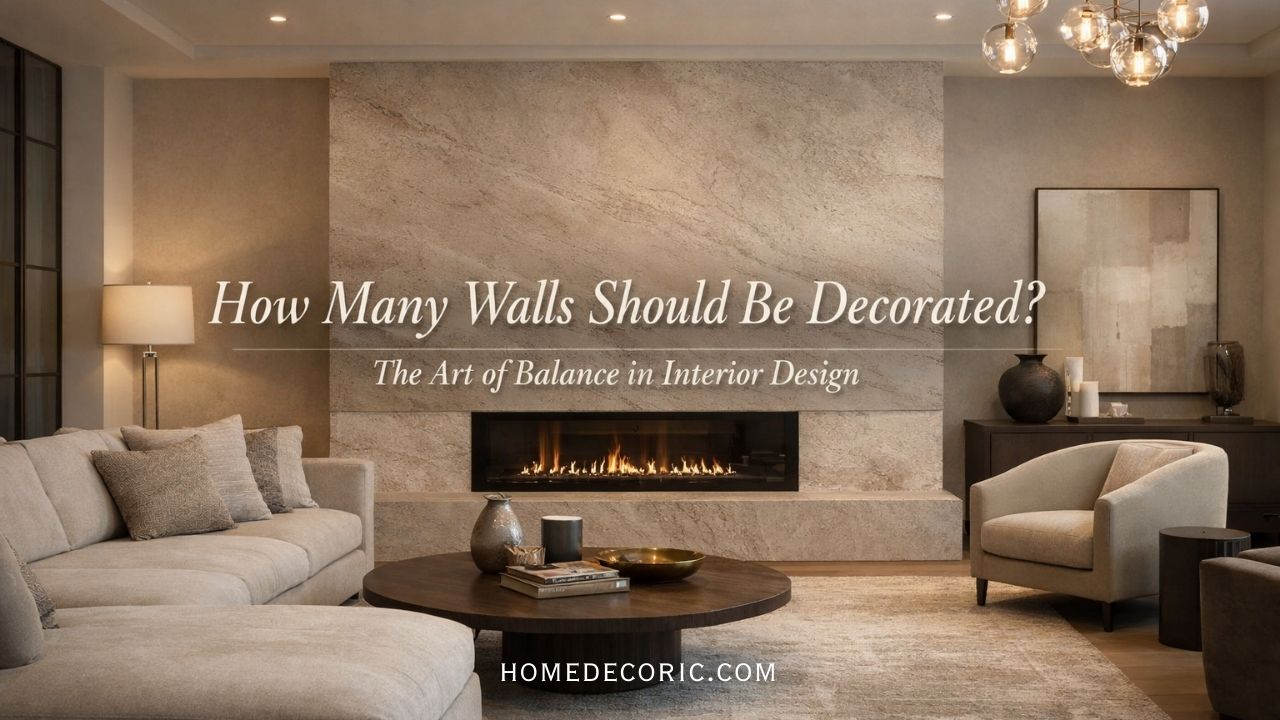
Decorating a single wall creates a clear focal point. This is commonly known as an accent wall and is often placed behind a bed, sofa, desk, or fireplace. By allowing one wall to stand out, the remaining walls provide visual breathing room, which helps the room feel open and composed.
This approach is especially effective in bedrooms, home offices, and compact living spaces where too much decoration can make the room feel crowded.
When Two or Three Walls Can Be Decorated
Decorating two walls works well in medium to large rooms, particularly living rooms and dining areas. One wall should remain visually dominant, while the second wall supports it with lighter elements such as subtle artwork, mirrors, or shelving.
In very large rooms, a third wall may be lightly treated, but visual weight must vary. Heavy decoration on all decorated walls creates competition rather than flow. One wall should always feel quieter to maintain balance.
Why Decorating All Four Walls Is Rarely Recommended
Decorating all four walls heavily removes the room’s focal point and often makes the space feel enclosed. Instead of appearing elegant, the room can feel busy and overwhelming.
The only time all four walls work together is when they are treated uniformly and subtly, such as with soft paint tones, gentle textures, or refined wallpaper that creates a cohesive envelope without visual noise.
How Visual Breathing Room Improves Design
Empty space is a powerful design element. Many designers follow a loose 60/40 balance, where roughly 40 percent of wall space remains visually quiet. This negative space allows decorated areas to feel intentional and gives the eye a place to rest.
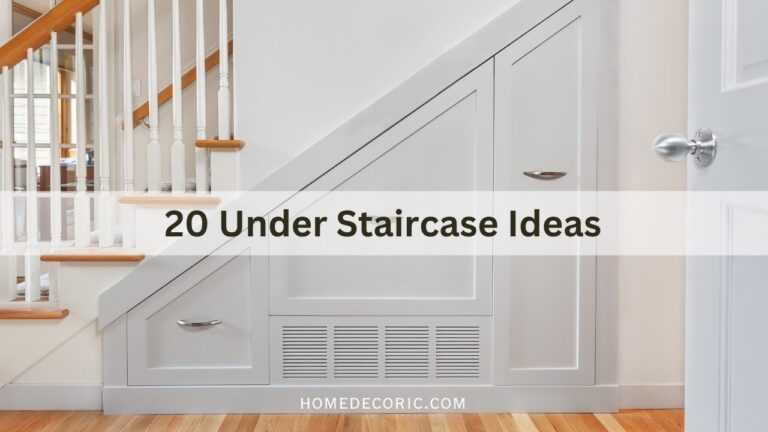
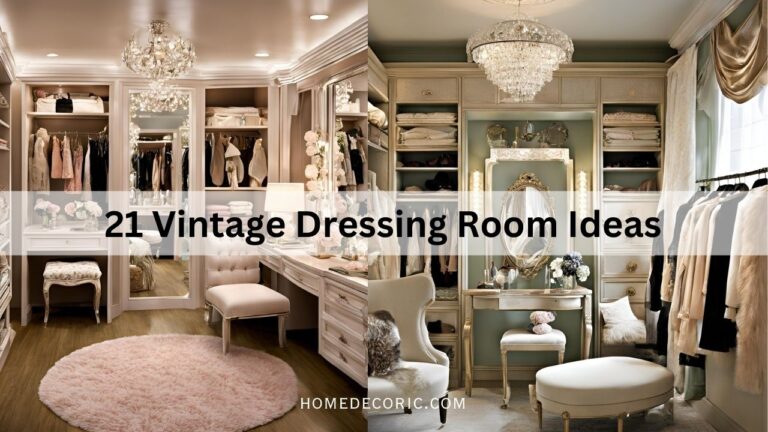
Walls already covered by large furniture such as wardrobes, bookcases, or built-in units should be considered decorated. Adding artwork to these surfaces often creates clutter rather than refinement.
How Architecture and Features Affect Wall Decoration
Architectural elements such as large windows, statement backsplashes, fireplaces, or textured finishes already function as visual focal points. Competing with these features using heavy wall décor can make a room feel crowded.
Instead, wall decoration should complement architectural features rather than overpower them.
Room-Specific Wall Decoration Strategies
Entryways and foyers are usually best with a single decorated wall, often above a console table or accent chair. Kitchens and bathrooms benefit from minimal decoration, with small art or shelving placed only in narrow or unused areas.
Hallways and staircases are ideal for gallery walls or photo collections because they are transitional spaces. Living rooms should be assessed after furniture placement, so wall décor supports the room’s layout rather than fighting it.
Common Wall Decoration Mistakes to Avoid
Hanging décor at the same height on every wall can create an unintentional visual stripe around the room. Overusing symmetry is another common mistake, as balance does not require mirroring every element.
Scale matters as well. Wall décor should relate proportionally to the furniture beneath it. Pieces that are too small or too large disrupt visual harmony.
Why Planning Before Decorating Matters
Planning helps avoid unnecessary holes and costly mistakes. Digital planning tools allow you to test wall colors, textures, and artwork placement before committing. Viewing the room from multiple angles helps ensure visual balance and flow.
The Design Rule That Always Works
The most reliable rule in wall decoration is simple: decorate fewer walls, but do so with intention. One strong focal wall or two carefully balanced walls will always feel more refined than filling every surface. Thoughtful restraint is what turns decoration into design.
Frequently Asked Questions About Wall Decoration
How many walls should you decorate in a room?
In most rooms, you should decorate one or two walls. This creates a clear focal point while keeping the space balanced and uncluttered.
Is it okay to decorate only one wall?
Yes, decorating only one wall is often the best choice, especially in small rooms. A single accent wall adds personality without making the room feel crowded.
Can you decorate all four walls in a room?
Decorating all four walls is usually not recommended unless the décor is very subtle and uniform. Heavy decoration on every wall can make a room feel busy and smaller.
How many walls should be decorated in a small room?
In a small room, decorating one wall works best. This keeps the space open and prevents visual overload.
How many walls should be decorated in a living room?
A living room typically looks best with one or two decorated walls, depending on its size and layout. One wall should remain the main focal point.
What is an accent wall?
An accent wall is a single wall that is decorated differently from the others to create a focal point. It may feature artwork, wallpaper, texture, or a bold color.
Is empty wall space bad interior design?
No, empty wall space is an important design element. It provides visual breathing room and helps decorated areas stand out more effectively.
Should wall décor match furniture size?
Yes, wall décor should be proportional to the furniture beneath it. Small art above large furniture often looks unbalanced, while oversized pieces in tight spaces can feel overwhelming.
Do windows and shelves count as wall decoration?
Yes, large windows, built-in shelves, wardrobes, and bookcases already count as decorated walls. Adding more décor on top of them is usually unnecessary.
What is the safest rule for wall decoration?
The safest rule is to decorate fewer walls and focus on quality and placement rather than quantity. This approach works in almost every room style and size.