

I Turned a Neglected 25th-Floor Rooftop Into a Garden in 3 Months (Real Guide from Reddit User)
While browsing Reddit the other day, I came across a discussion that genuinely stopped me in my tracks.
A user had shared their three-month progress on a roof terrace garden, 25 floors up, and I was honestly shocked. It did not look like a few sad pots on a windy balcony. It looked like a real, built-in garden, the kind you would expect to find in a backyard, not on top of a high-rise.
What struck me most was the timing. So many of us living in flats and apartments assume a proper garden is simply off the table: no yard, no soil, not enough space, too much wind.
The comments were full of the exact questions you would actually ask: How do you water something that high up? What about drainage, pests, and the brutal sun and wind? Can you even grow real grass up there?
So I gathered everything from that conversation, dug into the details, and turned it into this guide for you.
If you have ever looked at your own balcony or rooftop and thought “nothing will grow here,” this one is for you.
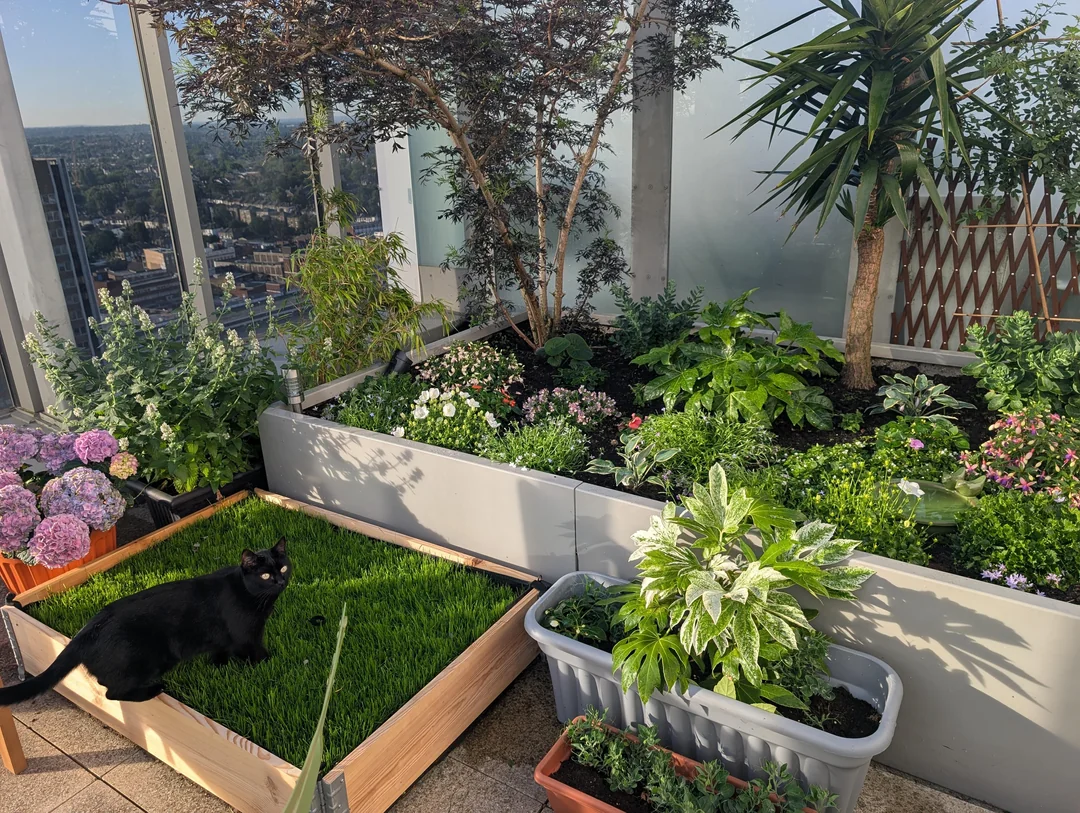
25 Floors Up, No Soil, Constant Wind: How This Rooftop Became a Garden Oasis in 90 Days
Three months ago, I moved into a flat with a bare, neglected roof terrace 25 floors up, and everyone told me the wind and sun would kill anything I planted. (reddit user aruztim)
They were wrong. Here is exactly how a high-rise terrace becomes a real garden, answered through the questions people actually ask. (source).
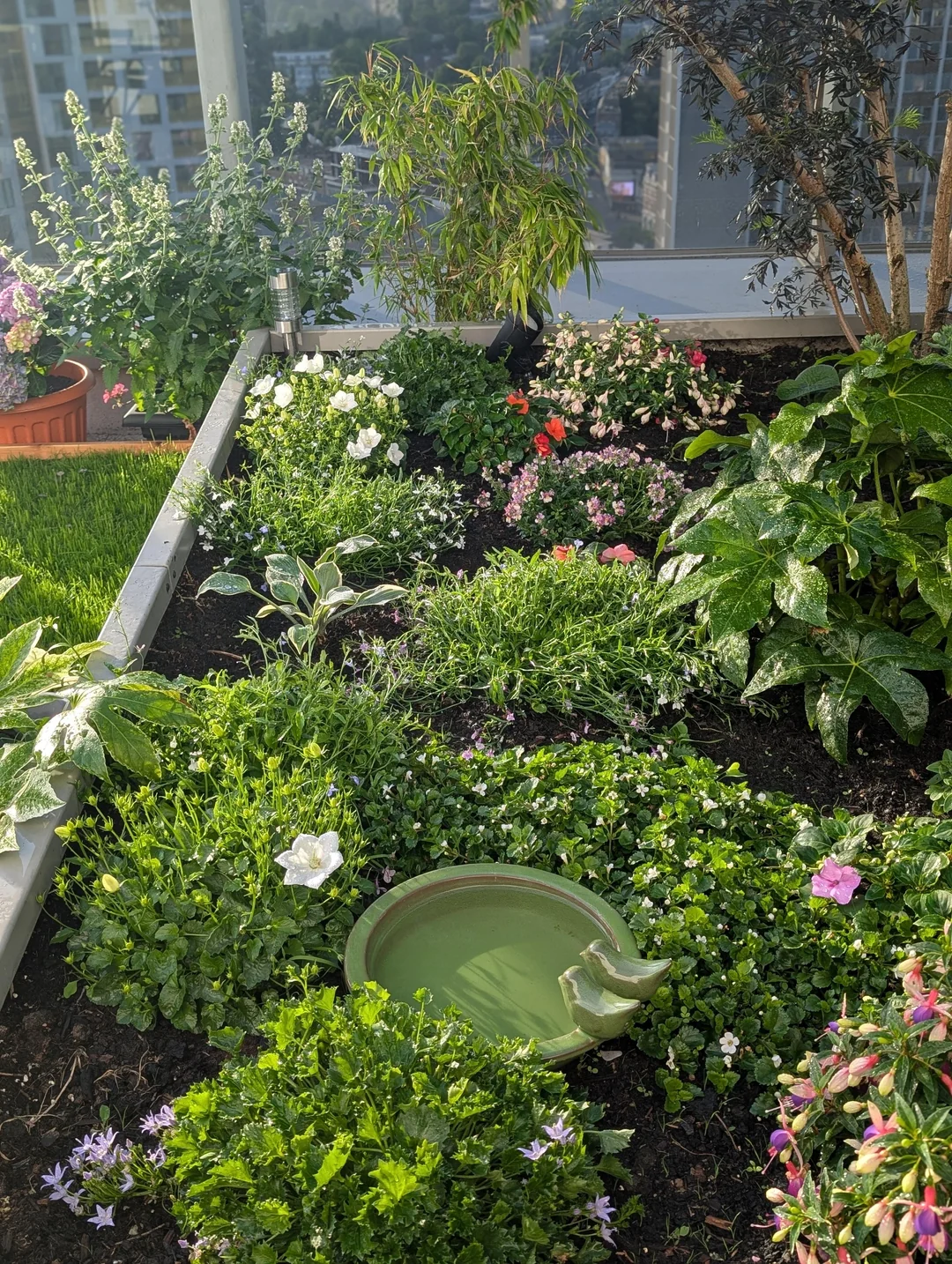
Can you really garden on a 25th-floor rooftop?
Yes. A high-rise roof terrace can be treated like a normal garden rather than a hostile environment. The two things that make or break it are water access and drainage, and once those are sorted, most container plants adapt to the height.
The biggest surprise for most people is that wind and sun are manageable, but watering discipline is not optional.
What helps the plants settle in:
- Start with what already survives up there before adding anything delicate.
- Choose container plants that tolerate exposure (hydrangeas, bay laurel, grasses, and hardy shrubs all proved themselves)
- Accept that the first few weeks are about watching, not planting more.
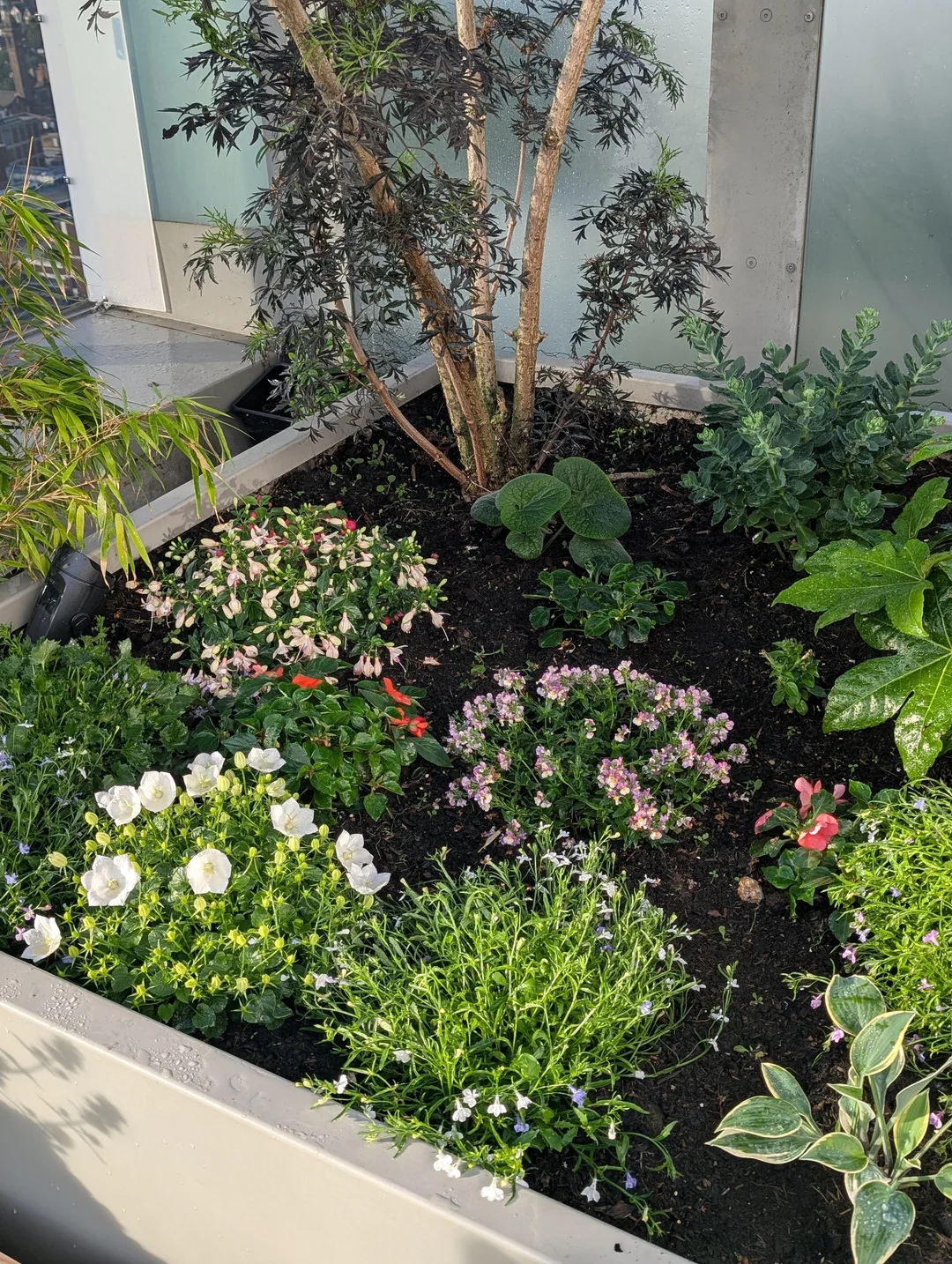
How do you water a garden that high up?
You need a tap and a hose on the terrace itself. Carrying watering cans up to the 25th floor is unsustainable, and any garden that relies on hauling water by hand will fail within weeks. A connected hose is the single feature that makes a high-rise garden maintainable.
Why rooftop containers are so thirsty:
- Wind dries soil far faster than at ground level.
- Direct, unshaded sun bakes container walls all day.
- Pots hold less moisture reserve than open ground, so they empty quickly.
- In peak heat, you may need to water daily, sometimes more.
How does drainage work on a rooftop terrace?
Most purpose-built terraces drain through floor drains set beneath the concrete slabs, so excess water collects and runs off without pooling.
Large built-in planters usually drain into that same collection system. If you inherit existing containers, you often will not see the bottoms, but the slab drains beneath them do the work.
Before you plant heavily:
- Locate the floor drains, so you know where water actually goes.
- Assume large fixed planters tie into the same drainage.
- Avoid blocking drains with debris, soil, or pots.

Will mulch help with the watering problem?
Yes. A layer of mulch on top of your containers slows evaporation and cuts how often you have to water.
On a windy, sun-blasted rooftop where moisture loss is the number one challenge, mulch is one of the cheapest fixes available.
Do you get pests 25 floors up?
Surprisingly, yes. Height does not keep pests away. The common rooftop offenders are spider mites, caterpillars, cottony cushion scale, mealybugs, and snails that often arrive in inherited soil. Many ground-floor gardeners fight the same insects, so elevation is no shield.
What worked against them:
- Mealybugs and cottony scale: a treatment like Provanto, combined with physically picking and crushing the ones you can reach
- Spider mites: the toughest to clear, requiring repeated treatment and patience
- Snails: manual removal over a few weeks dramatically thinned them out.
- Caterpillars: spot-check and remove by hand
A bay laurel was nearly lost to cottony cushion scale, so inspect new and inherited plants closely before assuming the height protects them.
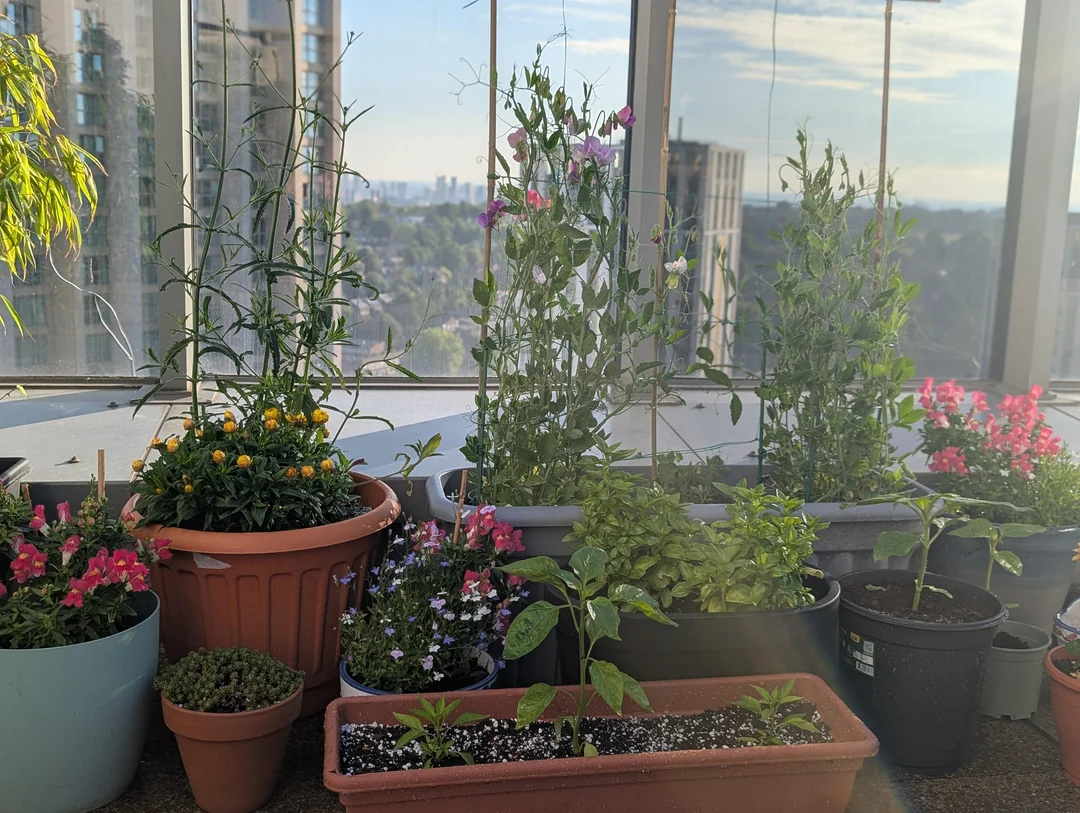
Do pollinators find plants that are high up?
This is one of the most-asked questions, and the honest answer is that bees and pollinators can and do travel surprisingly high, though traffic is lighter than at ground level. Flowering plants like hydrangeas still draw visitors; expect fewer than in a backyard garden.
Can you grow real cat grass on a terrace, and how do you keep it neat?
Yes, real cat grass grows well in a small dedicated container, and you keep it tidy by trimming it with ordinary scissors. You do not need special tools for a small patch, and letting it grow slightly taller between trims is fine. It becomes the cat’s favorite spot almost immediately.

Are you allowed to add a raised bed or planter?
This depends on your building, lease, or freeholder rules, so confirm before you build. Many terraces come with large planters already installed, which sidesteps the permission question. If you want to add a permanent raised bed, check with building management first to avoid having to tear it out later.
What about lighting the terrace at night?
Solar lights tucked into planters are the simplest option, since they need no wiring and charge in the same sun that challenges your plants. Soft, low lighting turns a daytime garden into a cozy evening space, and on a rooftop, it doubles as a safety feature along edges and paths.
The honest 3-month verdict
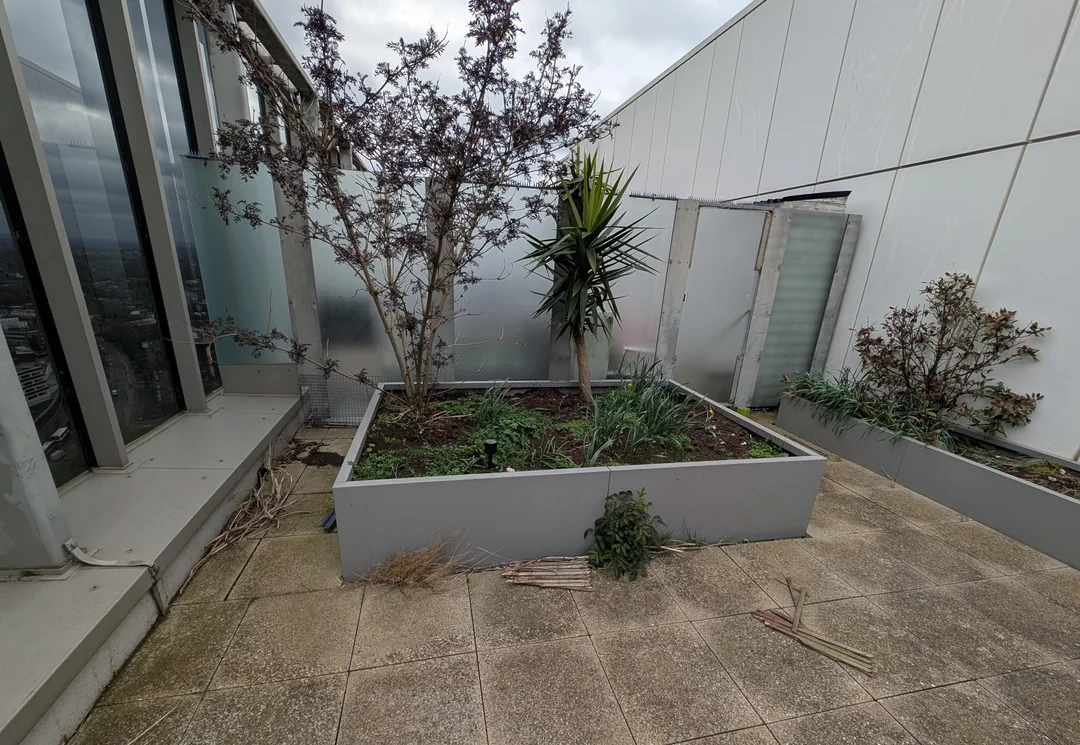
The before photo was a neglected, dirt-filled space that looked like nobody had touched it in years.
Three months later, it is a genuine oasis with hydrangeas, bay laurel, a cat-approved grass patch, and a black cat that has claimed the whole terrace as his own.
The lesson for anyone with a high-rise terrace: treat it like a real garden, solve water and drainage first, stay ahead of pests, and keep up with watering. Height is not the obstacle everyone assumes it is. Neglect is.
So, what about you? If you have a balcony, rooftop, or even a sunny windowsill sitting empty right now, what would you grow first?
Drop it in the comments. I would love to hear what your little oasis would look like.