
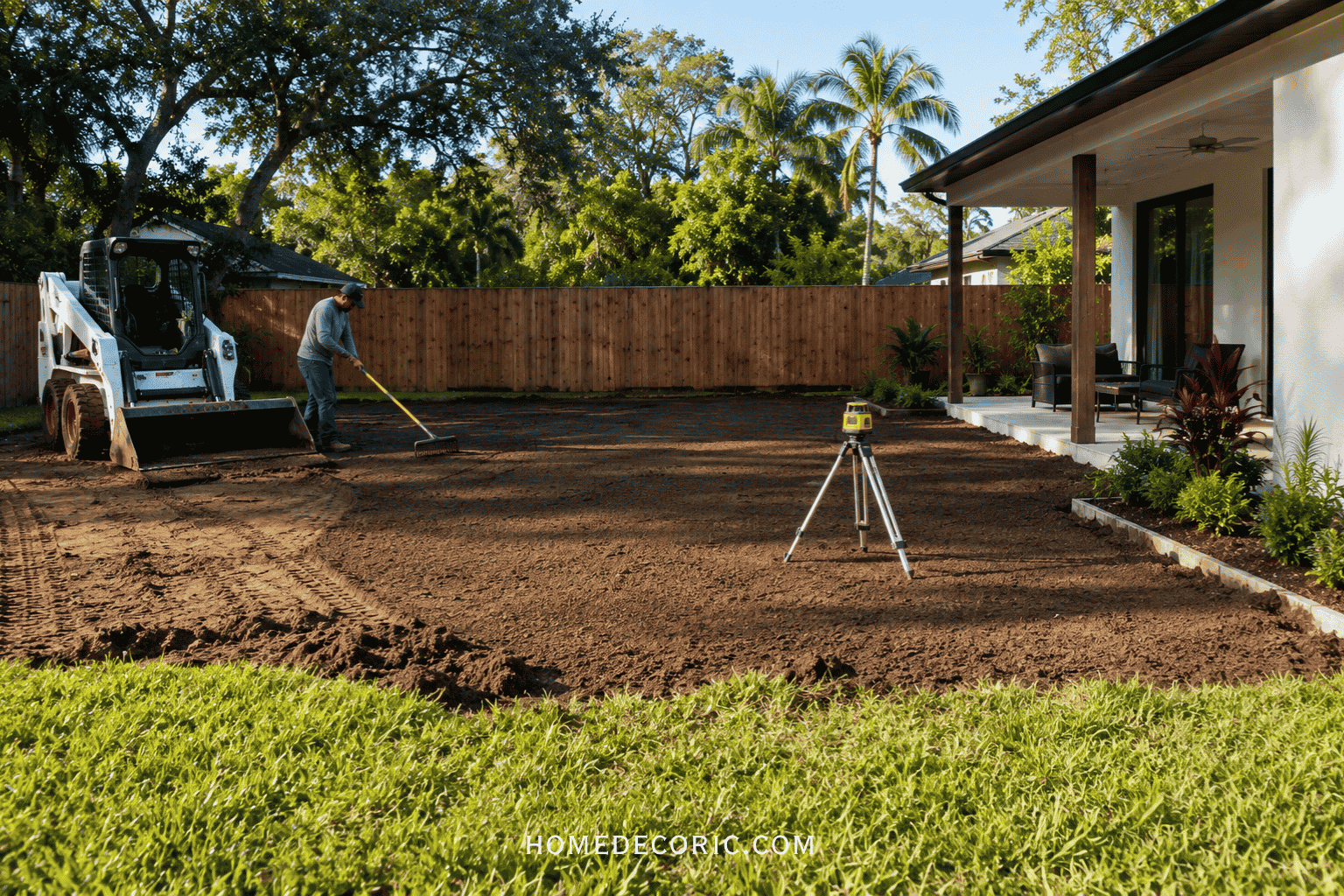
How to Level a Backyard: A Step-by-Step Guide for a Flat, Drainable Lawn
To level a backyard, mark the area and check the slope, mow the grass low, then fill low spots with a topsoil-and-sand mix while shaving down high spots. Rake the surface level, keeping a gentle slope away from your house for drainage, then lightly compact, water, and reseed any bare patches. A small yard takes a weekend; a large or severely uneven yard may need machinery or a pro.
Quick Answer: The 7 Steps
- Check the slope and mark high and low spots.
- Mow the lawn short so you can see the ground.
- Loosen or remove turf in the areas you’ll regrade.
- Add a leveling mix (topsoil and sand) to low spots.
- Shave down high spots and rake everything flat.
- Keep a slight slope away from the foundation for drainage.
- Compact lightly, water, and reseed.
Why Backyard Leveling Matters
A level backyard is not just about looks. Standing water from low spots breeds mosquitoes, kills grass, and can seep toward your foundation.
A yard that slopes toward the house instead of away from it is one of the most common causes of basement and crawl-space moisture. Leveling fixes drainage, makes mowing safer, and gives you a usable surface for a patio, play set, or garden.
A key rule most homeowners miss: a level yard should never be perfectly flat near the house. Building guidance generally calls for the ground to drop about 6 inches over the first 10 feet away from the foundation, roughly a 5 percent slope, so water always runs away from the structure.
Tools
- Garden rake and bow rake
- Shovel and spade
- Leveling rake or lawn leveler (a “lute”) for topdressing
- Wheelbarrow
- String line and stakes, plus a line level or a long board with a carpenter’s level
- Hand tamper or rented plate compactor for larger jobs
- Lawn roller (optional)
Materials
- Topsoil
- Coarse builder’s sand
- Compost (optional)
- Grass seed or sod matching your existing lawn
A common leveling mix is roughly equal parts sand and topsoil, with some compost added. Sand keeps the mix from compacting too hard, while topsoil and compost feed new grass.
How to Level a Backyard: Full Step-by-Step
Step 1: Assess the slope and find the problem areas
Drive a stake at the high end of the yard and one at the low end. Tie a string between them and hang a line level on it. Pull the string taut and level, then measure the gap between the string and the ground at several points. The gaps show you exactly where the low spots are and how deep they run. Mark low and high spots with spray paint or flags.
Step 2: Decide minor leveling vs. major regrading
Match the method to the severity:
- Minor dips (under about 2 inches): Topdress. Spread thin layers of leveling mix over the low spots without removing the grass.
- Moderate unevenness (2 to 4 inches): Cut and lift the turf, add fill underneath, then lay the turf back.
- Major slope or large low areas (over about 4 inches, or a whole yard that drains the wrong way): Full regrade. This often means removing turf, moving soil with a tiller or small machine, and re-establishing the slope.
Step 3: Mow low and prep the surface
Mow the lawn shorter than usual so the soil is easy to see, and the leveling mix can reach the roots. For areas you are regrading, remove or fold back the turf with a flat spade. For topdressing, you can leave the grass in place.
Step 4: Fill the low spots
Shovel your topsoil-and-sand mix into the low areas. For topdressing existing grass, add no more than about half an inch at a time so you do not smother it. For bare regraded areas, you can add more at once. Work the mix in with the back of a rake.
Step 5: Level and grade
Drag a leveling rake or a straight board across the surface to pull material from high spots into low spots. Constantly check against your string line.
Maintain that gentle slope away from the house. Step back often and look across the yard at eye level to catch waves you cannot see up close.
Step 6: Compact and firm
Lightly tamp the filled areas with a hand tamper or roll with a half-filled lawn roller. The goal is to firm the soil enough to stop future settling without packing it so hard that roots cannot grow. For full regrades over a large area, a rented plate compactor saves hours.
Step 7: Seed, water, and recover
Spread grass seed over bare and topdressed areas, lightly rake it in, and water gently. Keep the soil consistently moist but not soaked until the new grass establishes, usually 2 to 4 weeks, depending on the seed type and season. For faster results on bare areas, lay sod instead of seed.
Best Time of Year to Level a Backyard
The best time is during your grass’s active growing season, so it recovers fast: early fall or spring for cool-season grasses, and late spring through early summer for warm-season grasses.
Avoid leveling when the soil is soggy, since it compacts poorly, and skip peak summer heat or drought, when new grass struggles to establish.
How Much Does It Cost to Level a Backyard?
The cost depends on three things: the size of your yard, how uneven it is, and whether you do it yourself or hire a pro.
- DIY minor leveling: For small dips and topdressing, your only real cost is materials. A few bags of topsoil, sand, and grass seed will cover a small yard for well under $100 in most cases.
- DIY major regrade: Add equipment rental if you need a tiller, plate compactor, or small skid steer. Rentals typically run from around $50 to a few hundred dollars per day, depending on the machine.
- Hiring a pro: According to home services marketplace Angi, professionally regrading or leveling a yard usually costs between roughly $1,000 and $3,400, with an average near $2,000, and larger or steeply sloped yards running higher. (Angi: Cost to Regrade or Level a Yard)
The biggest cost drivers are the amount of soil that must be moved or hauled in, access for machinery, and whether drainage work or a retaining wall is involved. Get two or three quotes before committing, since pricing varies widely by region and yard condition.
When to Call a Professional
Handle it yourself for small dips, topdressing, and cosmetic flattening. Call a landscaper or grading contractor when:
- Water drains toward your house or pools near the foundation.
- The yard drops more than a few inches across a short distance.
- You are moving large volumes of soil or need it hauled in or out.
- Retaining walls, drainage pipes, or utility lines are involved.
Anything that touches foundation drainage or buried utilities is worth a professional’s eyes.
Frequently Asked Questions
Can you level a backyard yourself?
Yes. Minor to moderate leveling is a realistic DIY weekend project using topsoil, sand, a leveling rake, and grass seed. Full regrades that change drainage or move large amounts of soil are better left to a pro.
What is the best material to level a backyard?
A mix of about equal parts topsoil and coarse sand, often with some compost, is the standard leveling blend. The sand prevents hard compaction, and the topsoil and compost help new grass grow.
How do I level a yard without killing the grass?
Topdress in thin layers, adding no more than about half an inch of leveling mix at a time, so the grass blades can still reach light. Reapply after the grass grows through, rather than burying it all at once.
Should a backyard be perfectly flat?
No. It should look level but maintain a slight slope away from the house, generally about 6 inches of drop over the first 10 feet, so water drains away from the foundation rather than pooling.
How long does it take to level a backyard?
A small yard with minor dips takes a weekend. A large yard or a full regrade with machinery can take several days, plus a few weeks for new grass to establish.