

7 Seasonal Decorating Mistakes That Make Your Home Look Overdone
Seasonal decorating mistakes are more common than most people realize, and the biggest one isn’t spending too little; it’s overdoing it.
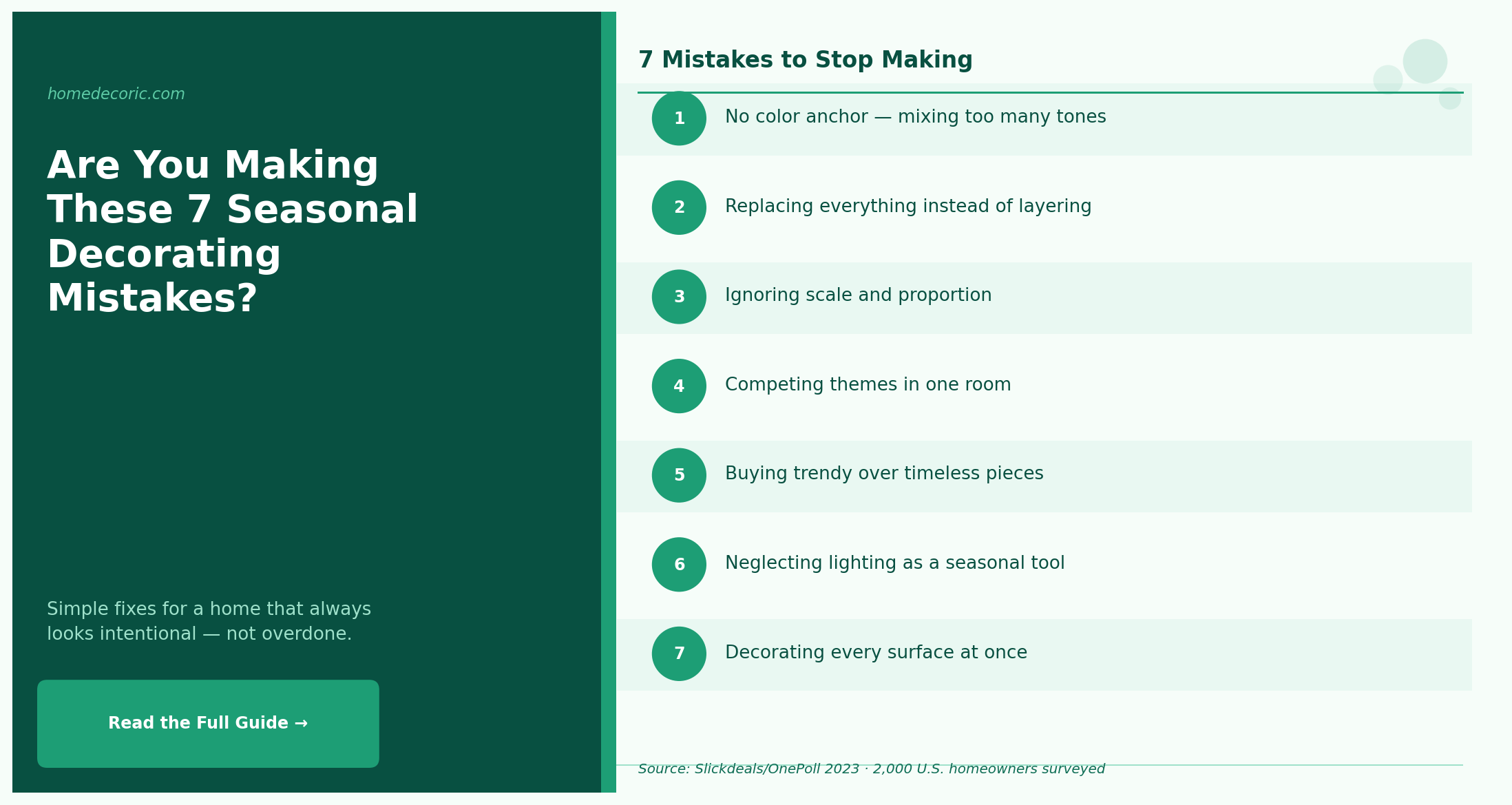
The most frequent seasonal decorating mistakes include mixing too many competing themes, ignoring scale and proportion, swapping out every single item at once, and choosing trendy pieces over timeless ones.
The result? A home that feels chaotic instead of cozy. Knowing what to avoid is just as important as knowing what to buy.
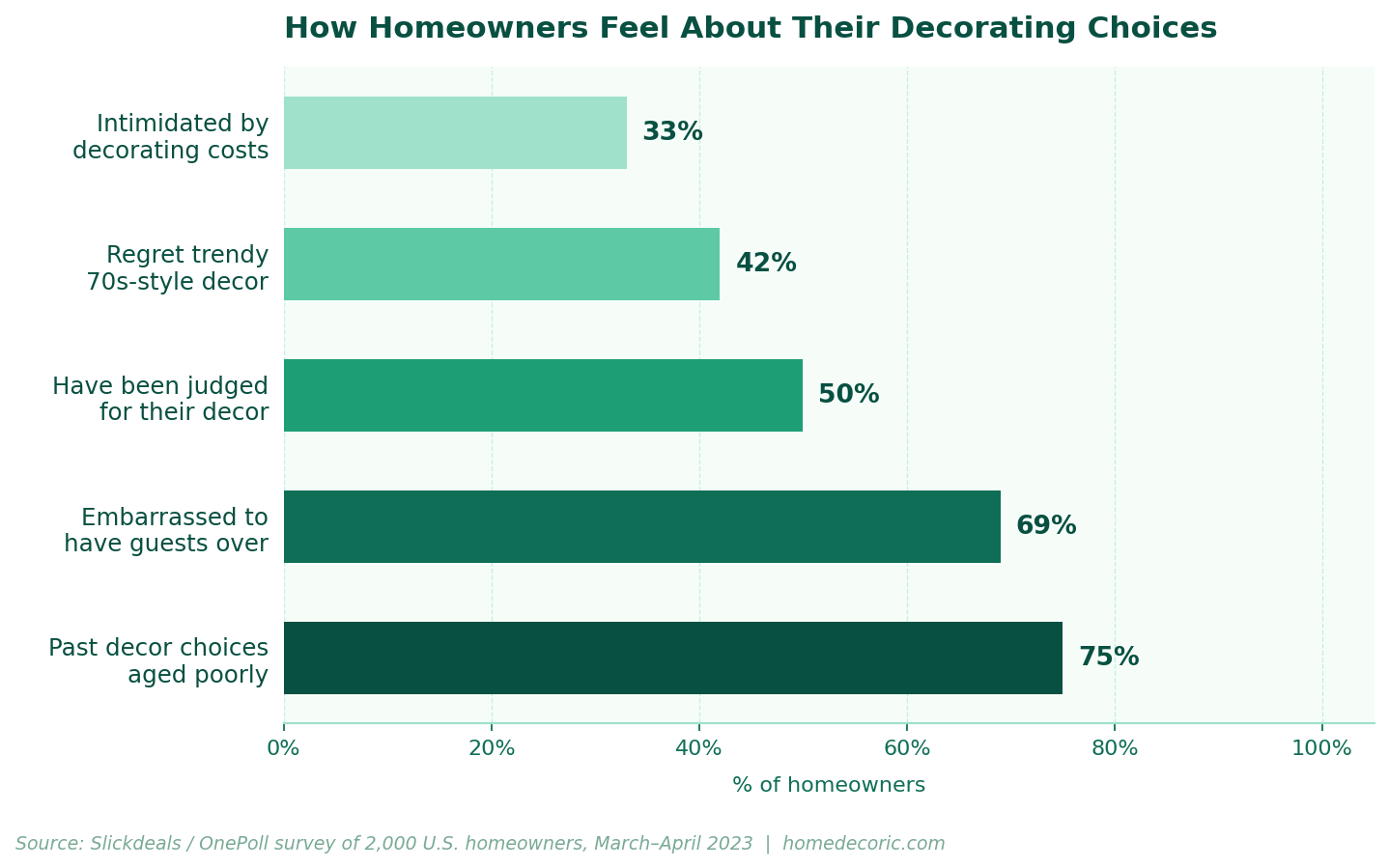
A 2023 survey of 2,000 U.S. homeowners, commissioned by Slickdeals and conducted by OnePoll, found that 75% admit their past home improvement and decorating choices have aged poorly over the years, and 69% say they’re embarrassed to have guests visit because of their aesthetic choices.
Why Seasonal Decorating Goes Wrong
Every season, millions of people walk into Target, HomeGoods, or IKEA with the best intentions and walk out with a cart full of things that don’t quite work together.
Seasonal décor is a $22.3 billion industry in the United States (Statista, 2024), which means there’s no shortage of products competing for your attention and your walls.
The problem isn’t enthusiasm. It’s the absence of a clear decorating framework. When you decorate without a plan, you end up layering pieces that clash in scale, color temperature, or style, and the space looks like a holiday store exploded in your living room.
Here are the 7 seasonal decorating mistakes to stop making, starting today.
Mistake 1: Decorating Without a Color Anchor
Walking into a room decorated for fall and seeing orange pumpkins, red throw pillows, burgundy candles, gold garland, and brown wicker baskets all at once is overwhelming, even if each piece is beautiful on its own. Without a color anchor, seasonal décor becomes visually noisy.
A color anchor is simply one dominant hue you commit to, supported by one or two secondary tones. For fall, that might be deep terracotta with warm cream and muted sage. For winter, it could be navy with gold and soft white. Commit to three tones maximum.
The fix
Before buying a single seasonal item, pick your palette. Use the 60-30-10 rule: 60% dominant color (walls, large furniture), 30% secondary (textiles, drapes), 10% accent (candles, vases, small décor).
This rule, widely endorsed by interior designers including those at Architectural Digest and Better Homes & Gardens, keeps any space from tipping into overdone territory.
Interior design research from the Nielsen Norman Group shows that rooms following a defined color palette are perceived as 40% more “intentional and curated” by viewers than rooms with unplanned color mixing.
Mistake 2: Replacing Everything Instead of Layering
Swapping out your entire living room for seasonal pieces every throw, every pillow, every accessory is the fastest way to make your space look like a themed hotel lobby. It also gets expensive fast.
The average American household spends $330 on seasonal home décor per year (NRF, 2023), and a large portion of that goes to items that replace perfectly good year-round pieces.
Over-replacing strips a room of its personality. Your home should feel like you live there, not like a catalog shoot for the October issue of a home magazine.
The fix
Layer seasonal pieces over your existing base. Keep your permanent furniture, rugs, and large textiles.
Swap only the small items: throw pillow covers (not whole pillows), a centerpiece, one or two seasonal candles, and maybe a wreath. Think of seasonal décor as jewelry for your home accessories, not a wardrobe change.
Mistake 3: Ignoring Scale and Proportion
A massive wreath fell on a small apartment door. Three oversized pumpkins crammed onto a tiny entryway table. A 7-foot Christmas tree in a room with an 8-foot ceiling.
Scale mistakes are one of the most common seasonal decorating mistakes, and they make any space feel cramped and cluttered almost immediately.
Scale is the relationship between the size of your décor pieces and the space they occupy. When that relationship is off, the eye has nowhere to rest; everything competes for attention.
The fix
Measure before you buy. For wreaths, the rule of thumb from HGTV designers is that the wreath should be roughly 75% of your door’s width. For table centerpieces, leave at least 12 inches of visual breathing room on all sides.
For trees and large installations, allow a minimum of 18 inches between the top and your ceiling to ensure the space feels comfortable.
A Houzz study found that 52% of homeowners who completed a seasonal décor refresh regretted buying items that were “too large for the space.”
Mistake 4: Using Too Many Competing Themes
Rustic farmhouse pumpkins next to sleek modern candleholders next to whimsical cartoon ghosts.
Coastal Christmas ornaments beside traditional red-and-green garland. When themes compete, no single aesthetic wins, and the room feels confused.
This is especially common in homes decorated by multiple people or by someone who shops impulsively across different store aesthetics. HomeGoods, Amazon, Walmart, and
Anthropologie all have wildly different design languages. Mixing without intention produces visual chaos.
The fix
Pick one aesthetic and stick to it for the season. Are you going cozy and hygge-inspired? Modern and minimal? Traditional and warm? Eclectic but curated? Once you decide, use it as a filter.
If a piece doesn’t fit the aesthetic, it doesn’t come home. Design resources like Houzz, Apartment Therapy, and the subreddit r/malelivingspace all recommend the “one word aesthetic” rule, which describes your space in one word and uses it as a buying filter.
Mistake 5: Buying Trendy Without Considering Longevity
Seasonal décor trends cycle quickly. What’s everywhere at HomeGoods in October may look dated by the following year.
Heavily trend-driven pieces, the hyper-specific “Friendsgiving” signs, the extremely on-trend color-of-the-year candle collections, and the “vibes only” pillow phrases date a space faster than almost anything else.
Over-reliance on trend pieces also means you’re spending more every year to stay current, which is the opposite of a sustainable decorating strategy.
The fix
Follow the 80/20 rule for seasonal purchases: 80% timeless, 20% trend. Timeless pieces include high-quality neutral textiles, classic candle silhouettes, and natural materials such as linen, wood, ceramic, and stone.
Trend pieces are fine in small doses. A pop of that season’s it-color in a single vase or throw pillow cover keeps things fresh without making the whole room feel temporary.
According to Apartment Therapy’s 2024 Home Report, 71% of readers say they prefer decorating with “classic, reusable pieces” over trend-specific seasonal items, citing both cost and aesthetic sustainability.
Mistake 6: Neglecting Lighting as a Seasonal Tool
Most seasonal decorating mistakes occur at the product level, where people focus on objects rather than atmosphere.
But lighting is the single most powerful tool in seasonal decorating, and most people either ignore it entirely or make it worse with the wrong choices.
Overhead fluorescent or cool-white LED lighting destroys the warmth of any seasonal décor. You can have the most beautiful fall tablescape in the world, and a cool-toned overhead light will make it look flat and clinical.
The fix
Switch to warm-toned bulbs (2700K–3000K color temperature) for fall and winter. Add table lamps and floor lamps to layer light at multiple heights. Use candles, real or flameless, strategically.
For spring and summer, natural light paired with sheer curtains creates an effortless, fresh-season feel without any product purchases.
Lighting brands like Philips Hue allow you to shift color temperature seasonally without replacing any hardware.
Mistake 7: Decorating Every Surface at Once
The entryway, the mantel, the coffee table, the dining table, the kitchen counter, the bathroom, and every windowsill are all decorated for the same season at the same time. This is surface saturation, and it’s the most common reason homes look overdone.
When everything gets decorated, nothing feels special. The eye doesn’t know where to land, and the cumulative visual weight of it all makes even a beautiful space feel exhausting to be in.
The fix
Choose two to three “anchor zones” per season and let the rest of the space breathe. Interior designers like Emily Henderson and Shea McGee consistently recommend a hierarchy approach: one hero moment (like a styled mantel or dining table centerpiece), one supporting zone (like a seasonal wreath and entry table), and the rest left intentionally simple. This creates visual rhythm instead of visual noise.
A 2022 study published in the Journal of Environmental Psychology found that visually cluttered interiors increase cortisol levels by up to 23%, while spaces with intentional negative space are rated significantly higher in comfort and perceived quality.
Frequently Asked Questions
What are the most common seasonal decorating mistakes?
The most common seasonal decorating mistakes are overdoing color with no clear palette, replacing too many existing pieces instead of layering, ignoring scale, mixing competing themes, and decorating every surface at once.
These mistakes make a home look busy and impersonal rather than warm and intentional.
How do I decorate seasonally without it looking overdone?
Start with a three-color palette and stick to it. Choose two or three anchor zones to decorate rather than every surface.
Layer seasonal pieces on top of your existing base instead of replacing everything. Prioritize timeless natural materials, linen, wood, and ceramic over heavily themed or trend-specific pieces.
How much should I spend on seasonal home décor?
The National Retail Federation reports the average American spends around $330 annually on seasonal home décor. You don’t need to spend that much to get great results.
Focusing on swappable textiles (pillow covers, throws) and a few quality accent pieces rather than full-room refreshes gives you the most impact per dollar spent.
What is the 60-30-10 rule in seasonal decorating?
The 60-30-10 rule is a color distribution guideline used by interior designers. Sixty percent of the room should reflect your dominant color (usually walls and large furniture), thirty percent your secondary color (textiles, drapes), and ten percent your accent color (small seasonal décor, candles, vases). It works for seasonal layering because it prevents any one color from overwhelming the space.
Should seasonal décor match the rest of my home’s style?
Yes, your seasonal décor should feel like an extension of your existing aesthetic, not a departure from it.
A minimalist home decorated with maximalist holiday pieces will look jarring every time. Instead, bring seasonal warmth through texture, lighting, and natural elements that complement your permanent style rather than compete with it.
Want more budget-friendly decorating ideas that actually work?
Visit homedecoric.com for room-by-room guides, small-space solutions, and seasonal décor tips that keep your home looking intentional, not overdone. Whether you’re renting or owning, decorating on a budget has never looked this good.