
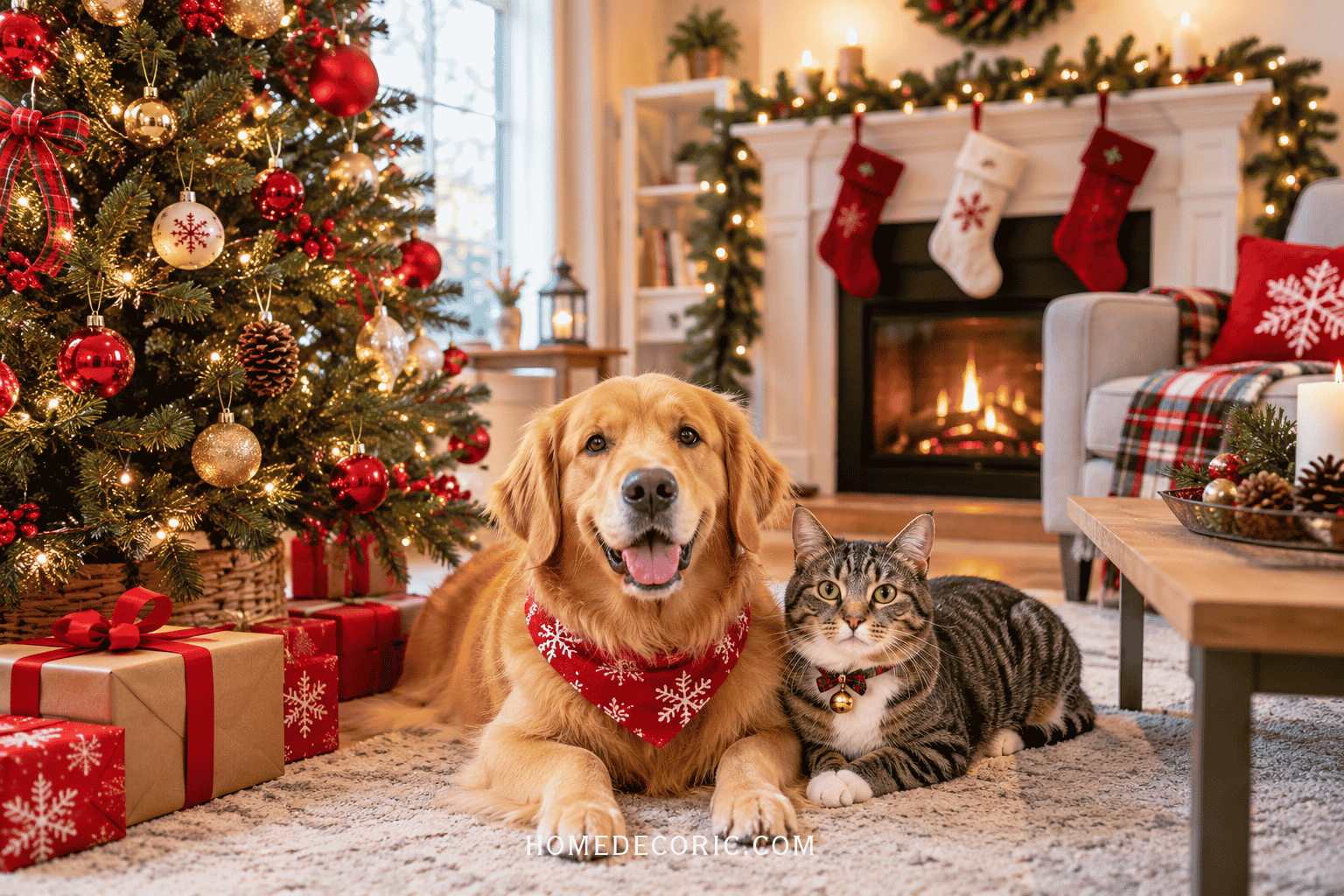
How to Keep Christmas Decorations Safe Around Pets
Christmas is one of my favorite times to make a home feel warm, cozy, and festive. From sparkling Christmas trees to beautiful ribbons and decorative ornaments, every little detail adds to the holiday magic. But if you share your home with curious cats or playful dogs, some of those decorations may not be as harmless as they look.
I always recommend thinking about your pets before decorating for Christmas. Tinsel, loose ribbons, electrical cords, glass ornaments, open candles, and even water in the Christmas tree stand can pose unexpected risks to cats and dogs.
The good news is that you don’t have to give up your favorite Christmas decorations to create a pet-friendly home. A few thoughtful choices, such as securing your tree, choosing shatterproof ornaments, hiding electrical wires, and keeping potentially harmful decorations out of reach, can make a big difference.
You can still enjoy a beautifully decorated Christmas home while giving your furry family members a safer place to celebrate.
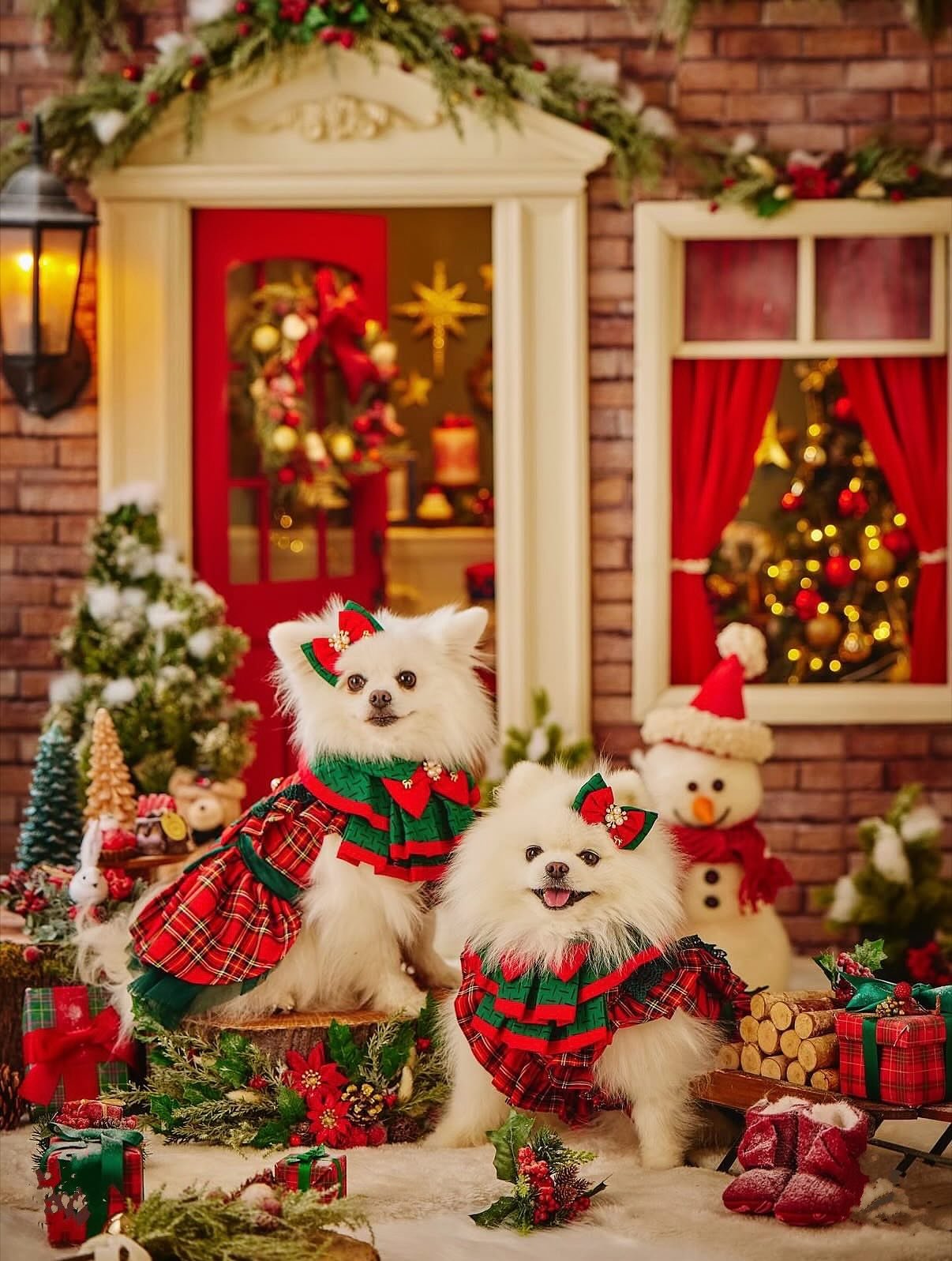
Why Can Christmas Decorations Be Dangerous for Pets?
Pets naturally explore their surroundings. Cats may climb Christmas trees, play with hanging ornaments, or chew ribbons. Dogs may investigate decorations with their mouths, knock over trees, or swallow small objects.
Some common Christmas decorations can cause problems if pets chew, swallow, or come into contact with them.
Potential holiday hazards include:
- Tinsel and decorative ribbons
- Small ornaments and ornament hooks
- Glass decorations
- Electrical light cords
- Christmas tree water
- Candles and potpourri
- Certain holiday plants
Understanding these risks is the first step toward creating a pet-friendly Christmas environment.
1. Secure Your Christmas Tree to Prevent Accidents
A Christmas tree can attract both cats and dogs. Cats may try to climb its branches, while dogs may bump into it or pull decorations from the lower branches. An unstable tree can fall and injure your pet or damage furniture.
Follow these precautions:
- Use a strong, stable Christmas tree stand.
- Place the tree away from busy walkways.
- Secure the tree to a wall or another stable support.
- Avoid placing the tree near furniture that cats can use as a jumping point.
- Keep pets away from the tree when you cannot supervise them.
If you have a particularly curious cat or an energetic dog, consider using a smaller tree or placing it in a room you can close when necessary.
2. Avoid Tinsel, Ribbons, and Small Decorative Strings
Tinsel and ribbons may look attractive, but they can be especially dangerous for pets.
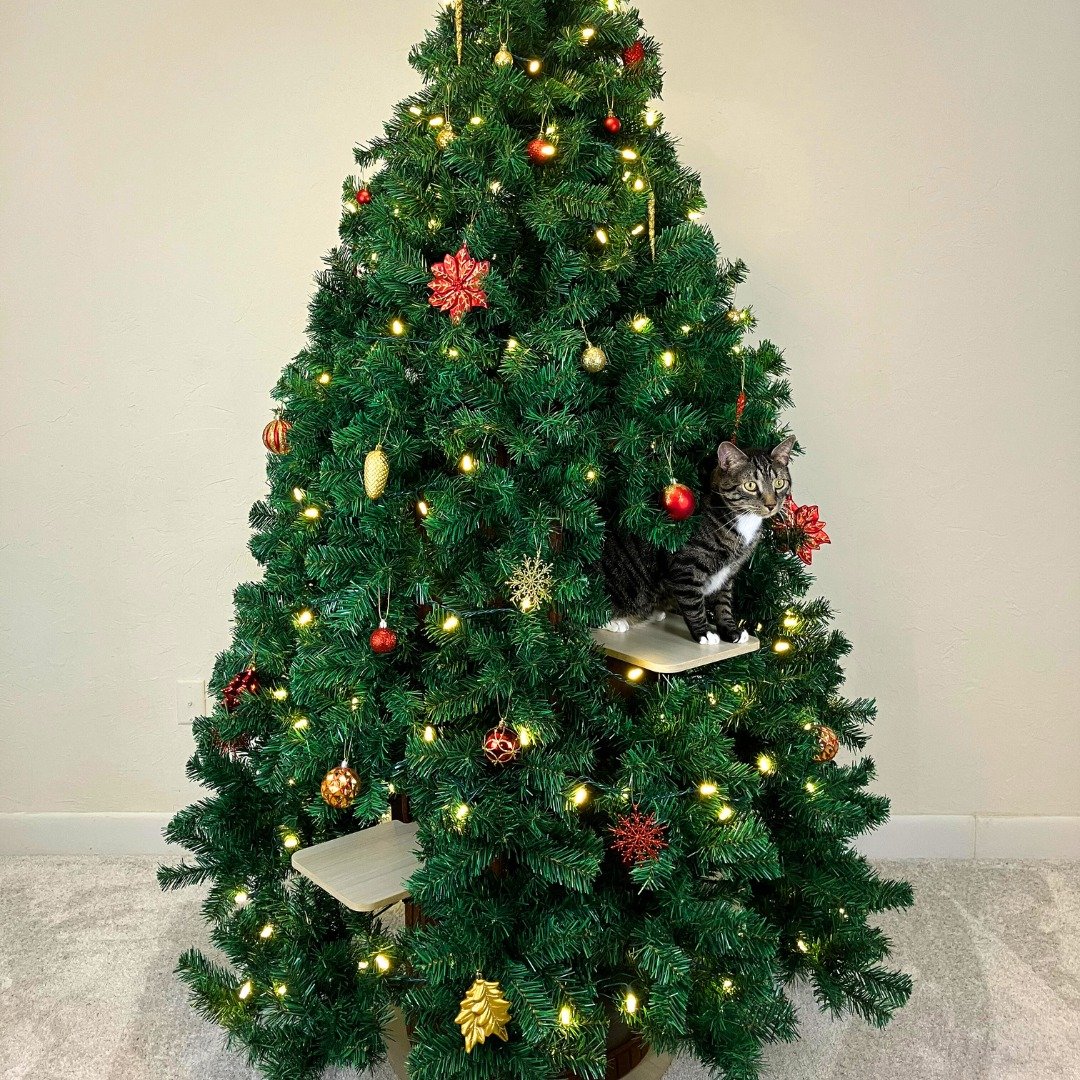
Cats are often attracted to shiny, moving objects.
Dogs may also chew or swallow decorative strings. If swallowed, these materials can cause serious intestinal problems and may require emergency veterinary treatment.
For safer Christmas decorating:
- Avoid hanging tinsel on your Christmas tree.
- Keep decorative ribbons away from pets.
- Do not leave gift-wrapping materials on the floor.
- Store unused ribbons and strings in closed containers.
- Choose decorations without long, loose strands.
Avoid these decorations altogether if your pets tend to chew or swallow unusual objects.
3. Choose Shatterproof Christmas Ornaments
Glass ornaments can break easily when a pet bumps into the tree or knocks a decoration onto the floor. Broken pieces may cut paws or mouths. Small ornaments can also become choking hazards if swallowed.
Place delicate or valuable ornaments higher on the tree, where pets are less likely to reach them. Remember, even shatterproof decorations aren’t automatically safe to chew. Keep an eye on pets around the tree.

4. Keep Electrical Wires and Christmas Lights Out of Reach
Christmas lights create a beautiful festive atmosphere, but electrical cords can be dangerous if pets chew them.
Chewing an electrical wire can cause electric shock, burns, or other serious injuries.
To reduce the risk:
- Keep electrical cords behind furniture where possible.
- Use cord covers or protective cable tubing.
- Avoid leaving loose wires on the floor.
- Unplug Christmas lights when leaving home or going to bed.
- Replace damaged or exposed electrical cords immediately.
- Keep extension leads away from water and areas pets can access.
If your cat or dog chews cables, avoid placing exposed Christmas lights where they can reach them.

5. Protect Pets from Christmas Tree Water
If you use a real Christmas tree, watch the water in its stand. Pets may try to drink from the tree stand, especially when they are curious or thirsty.
Tree water may contain bacteria, dirt, sap, or other contaminants. Added preservatives or chemicals can create additional risks.
See more: When Do the Christmas Decorations Go Up in New York
Here are some precautions:
- Cover the tree stand with a secure barrier.
- Do not add fertilizers or chemical preservatives to the water.
- Keep pets from drinking water from the tree stand.
- Clean up spilled water immediately.
- Provide fresh drinking water in your pet’s usual bowl.
A tree stand cover can help prevent curious pets from accessing the water.

6. Be Careful with Candles, Plants, and Holiday Fragrances
Christmas decorations often include candles, scented products, and seasonal plants. Some of these can create risks for cats and dogs.
Candles: Curious pets can knock over candles, causing burns or even a fire. Place candles out of reach, and never leave a burning candle unattended. Flameless LED candles are a safer decorative alternative.
Holiday plants: Some seasonal plants can harm pets. Mistletoe and certain varieties of holly can cause problems if eaten. Lilies are particularly dangerous to cats and should be kept out of homes with cats.
Potpourri and scented decorations: Liquid potpourri and some fragrance products can irritate or harm pets if swallowed or contacted. Store these products securely and follow product safety instructions.
Before bringing seasonal plants or scented decorations into your home, check whether they are safe for your particular pet.
7. Create a Pet-Friendly Christmas Area
You do not need to remove all Christmas decorations to make your home safer. Instead, create a comfortable space where your pets can relax without getting into decorations.
You can:
- Place your pet’s bed away from the Christmas tree.
- Keep toys and treats in an accessible area.
- Use pet gates to restrict access to decorated rooms.
- Provide scratching posts and climbing alternatives for cats.
- Give dogs suitable chew toys to keep them occupied.
For cats, a separate climbing tree or scratching post can provide an alternative to exploring the Christmas tree.
For dogs, regular playtime and appropriate chew toys can help reduce interest in decorations.
8. What Should You Do If Your Pet Swallows a Christmas Decoration?
If you think your pet has swallowed tinsel, ribbon, an ornament hook, part of a decoration, or another potentially dangerous object, contact your veterinarian immediately.
Do not wait for symptoms to appear. Some swallowed objects can cause serious internal problems even when a pet initially looks normal.
Watch for warning signs such as:
- Vomiting or repeated retching
- Loss of appetite
- Unusual tiredness
- Abdominal pain
- Difficulty passing stool
- Excessive drooling
- Difficulty breathing
Do not try to make your pet vomit unless a veterinarian specifically instructs you to do so.
If your pet has chewed an electrical cord, seek veterinary advice immediately, even if there are no obvious injuries.
Common Christmas Decorating Mistakes Pet Owners Should Avoid
A few small decorating mistakes can create unnecessary risks for pets.
Avoid these common problems:
- Leaving tinsel and ribbons within reach.
- Using fragile glass ornaments on lower tree branches.
- Leaving electrical cords exposed.
- Allowing pets to drink Christmas tree water.
- Keeping burning candles near pets.
- Bringing potentially toxic plants into the home without checking their safety.
- Leaving small decorations and ornament hooks on the floor.
Assuming that a decoration is safe simply because your pet has ignored it before.
A little preparation can help prevent many holiday accidents.
Frequently Asked Questions
1. What Christmas decorations are dangerous for pets?
Tinsel, ribbons, small ornaments, glass decorations, ornament hooks, electrical wires, candles, and certain holiday plants can be dangerous for pets.
2. Are artificial Christmas trees safe for cats and dogs?
Artificial Christmas trees can avoid some risks associated with real trees, such as fallen needles and tree water.
However, pets may still chew branches, swallow plastic pieces, or knock the tree over. Secure the tree and supervise your pets.
3. Is tinsel dangerous for cats?
Yes. Cats may swallow tinsel because it moves and shines. Swallowed tinsel can cause serious intestinal problems and may require emergency veterinary care.
4. Can dogs drink Christmas tree water?
It is best to prevent dogs from drinking Christmas tree water. It may contain bacteria, dirt, sap, or added chemicals that could cause problems.
5. How can I stop my cat from climbing the Christmas tree?
Secure the tree, place it away from furniture that can be used as a jumping point, avoid tempting decorations, and provide alternative climbing spaces such as a cat tree.
6. Are Christmas lights safe around pets?
Christmas lights can be used with precautions. Keep electrical cords covered or out of reach, inspect them for damage, and unplug lights when they are not being supervised.
7. What should I do if my dog eats a Christmas ornament?
Contact your veterinarian immediately. Do not wait for symptoms or try to induce vomiting unless your veterinarian specifically tells you to do so.
Final Thoughts: Enjoy a Beautiful and Pet-Safe Christmas
Keeping Christmas decorations safe around pets does not mean giving up your favorite holiday traditions. It simply means choosing decorations carefully and thinking about how your cats or dogs interact with your home.
Secure your Christmas tree, avoid tinsel and loose ribbons, choose shatterproof ornaments, protect electrical wires, and keep candles and potentially harmful plants away from pets.
Most importantly, supervise your pets around holiday decorations and contact a veterinarian if you suspect they have swallowed something dangerous.
A beautiful Christmas home should also be a comfortable and safe place for every family member, including your furry companions.


