

How to Decorate a Slim Christmas Tree: 10 Tricks to Make It Look Fuller and More Beautiful
A slim Christmas tree is a beautiful way to bring Christmas magic into a home without taking up too much floor space. But decorating a narrow tree comes with a few challenges. Oversized ornaments can make it look crowded, large bows can throw off its proportions, and poorly arranged branches can leave noticeable gaps.
When I decorate a slim Christmas tree, I focus on three things: keeping the decorations proportional, creating visual depth, and connecting the tree to the rest of the room. You don’t need dozens of ornaments or expensive decorations to get a beautiful result.
In this guide, I’ll walk you through 10 practical steps for decorating a slim Christmas tree, including how to arrange the branches, choose ribbon, position ornaments, add lights, and create a fuller-looking finish.
Every year when I pull out my slim Christmas tree, I’m reminded why I love it so much. There’s something incredibly charming about its tall, graceful shape. It doesn’t take up much space, but it still fills the room with that warm holiday feeling. Decorating it has become a ritual I look forward to.
How to Decorate a Slim Christmas Tree: Step-by-Step Guide
1. Choose the Right Theme for Your Slim Christmas Tree
A theme acts as the foundation for a cohesive look. With a slimmer silhouette, your décor choices need to be precise and consistent.
Popular themes include:
- Minimalist Nordic: neutral tones, wooden accents, soft whites.
- Classic Red & Gold: traditional, warm, and festive.
- Modern Metallics: silver, champagne gold, and pearl ornaments.
- Rustic Woodland: pinecones, burlap ribbons, natural textures.
- Winter Wonderland: icy blues, clear glass, shimmering white.
Before choosing a theme, look at the room where your tree will stand. A slim tree in a small apartment may look beautiful with soft white, champagne, and natural wood decorations, while a tree in a traditional living room might suit red, gold, and green.
I also recommend choosing one main color, one supporting color, and a small accent color. This gives the tree a coordinated appearance without making its narrow branches look overcrowded. If your room already has a strong color scheme, borrow one or two shades from your existing furniture, curtains, or cushions.
See more: How to Keep Christmas Decorations Safe Around Pets
Buy Slim Christmas Trees for Small Spaces
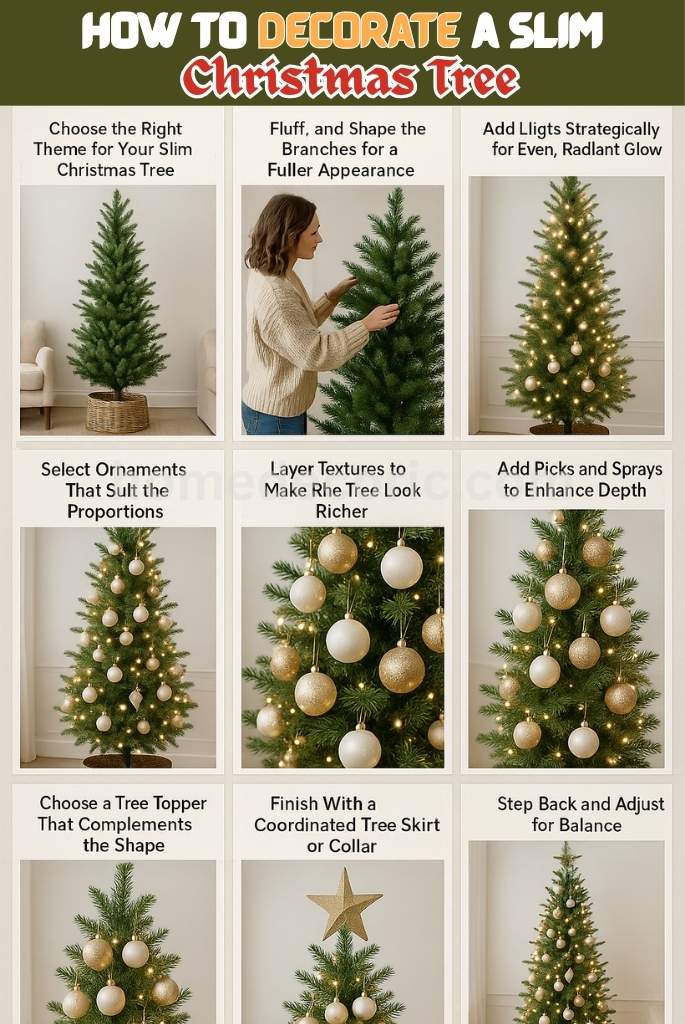
2. Fluff and Shape the Branches for a Fuller Appearance
Slim trees can sometimes look sparse. Spending time shaping each branch makes a dramatic difference.
Start shaping your tree from the bottom and work upward. Separate the individual branch tips, spreading them outward and slightly upward rather than leaving them compressed in one direction.
Pay extra attention to the front of the tree, where gaps are most noticeable. Turn a few smaller branch tips toward the center to cover empty spaces, and arrange the outer tips so the tree keeps its natural tapered silhouette.
Here is how I recommend shaping a slim tree:
- Open the inner branches first to build a fuller foundation.
- Spread the outer tips in different directions to cover visible gaps.
- Turn selected tips toward the front to improve coverage.
- Step back and check the tree from the main viewing angle.
- Adjust uneven sections before adding lights or ornaments.
3. Add Lights Strategically for an Even, Radiant Glow
Lighting can make a slim Christmas tree look much more inviting, especially when the branches are not very dense. Instead of wrapping the lights only around the outside, work from the trunk toward the branch tips.
This creates a layered glow and helps illuminate the tree from different angles.
For a balanced result:
- Start near the bottom and work upward.
- Place some lights deeper inside the branches.
- Spread the remaining lights toward the outer tips.
- Keep the spacing reasonably even instead of clustering all the bulbs in one area.
- Choose warm white lights for a cozy traditional look or cool white for a crisp winter theme.
The number of lights you need depends on the tree’s height, width, branch density, and how bright you want the finished look. A narrow, sparse tree may need fewer lights than a dense one of the same height.
Avoid pulling the light strand too tightly around the branches. Leave enough flexibility to adjust the lights without bending or damaging the tips.
4. Use the Right Ribbon Technique to Add Movement
Ribbon helps soften the slender shape and adds visual dimension.
Techniques that work best on slim trees:
- Vertical cascading: creates length and elegance.
- Soft waves tucked in and out: adds Depth without overwhelming.
- Double-layer ribbons: mix a sheer ribbon with a textured one.
Ribbon width matters more on a slim tree because there is less space between the branches. Very wide ribbon can cover too much greenery and make the tree appear heavier than it really is.
For a narrow tree, try a ribbon that complements the tree’s overall size. A narrow cascading ribbon works especially well when you want to emphasize its height. You can also cut several shorter lengths, tuck their ends into the branches, and create soft loops that flow downward.
If you want to use two ribbons, choose different textures rather than two competing patterns. For example, a simple velvet ribbon paired with a sheer gold ribbon creates interest without making the tree look busy.
Secure the ribbon gently within the branches instead of wrapping it tightly around the entire tree.
5. Select Ornaments That Suit the Proportions
Slim trees have less branch surface, so ornament choice is crucial.
A slim Christmas tree has less branch space than a traditional full-size tree, so I prefer ornaments that complement its shape rather than cover every available branch.
Here are some ornament choices that work particularly well:
- Small baubles: Great for filling smaller spaces between branches.
- Medium ornaments: Add color and decoration without overwhelming the tree.
- Lightweight statement pieces: Add a few noticeable focal points to the tree.
- Finial ornaments: Their elongated shape works beautifully with a tall, narrow silhouette.
- Specialty ornaments: Personal decorations, miniature houses, stars, and snowflakes add character.
Try placing a few larger ornaments closer to the trunk and smaller ones toward the outer branches. This creates visual depth and prevents the decorations from appearing concentrated in one area.
Before hanging a heavy ornament, check whether the branch can support its weight. If it bends noticeably, move the ornament closer to the trunk or choose a lighter decoration.
My favorite approach is to leave a little greenery visible between ornaments. A slim tree doesn’t need to be completely covered to look beautifully decorated.
Buy Slim Christmas Trees for Small Spaces
6. Layer Textures to Make the Tree Look Richer
Tree décor looks expensive when multiple textures blend harmoniously.
Perfect textures for slim trees:
- Glass
- Brushed metal
- Matte finishes
- Felt or fabric
- Wood
- Glitter accents (sparingly)
The trick is to combine textures without introducing too many competing finishes. For example, matte baubles, velvet ribbon, and a few metallic ornaments can create a beautiful combination. If your theme is rustic, try natural wood decorations with burlap ribbon and a few warm white lights.
I would avoid using too many oversized decorations with different patterns. On a slim tree, a smaller selection of complementary textures usually creates a more polished finish.
7. Add Picks and Sprays to Enhance Depth
Floral picks, berry stems, and branch sprays are secret weapons for slim trees.
Why they work:
- Add volume without needing extra ornaments
- Fill vertical gaps naturally
- Create a designer, boutique-tree look
When choosing picks for a slim tree, pay attention to their length and shape. Long, narrow stems, delicate berries, frosted branches, and small pinecones can add interest without making the tree look wider than intended.
Place a few picks at different heights rather than clustering them all at the top. Angle some slightly outward and others upward to create movement. Keep the additions light and leave enough greenery visible so the tree maintains its natural shape.
8. Choose a Tree Topper That Complements the Shape
Large, oversized toppers can overwhelm a slim tree.
Best toppers for narrow trees:
- Slim star toppers
- Ribbon bows with trailing tails
- Metal snowflakes
- Minimalist geometric shapes
- Vertical finials
A topper should finish the tree rather than compete with it. Before choosing one, consider the tree’s height, width, and available ceiling clearance.
A narrow star, lightweight bow, or vertical finial can work particularly well. If the top branches are delicate, use a lightweight topper or a secure attachment so the upper section doesn’t bend.
Also check the tree from the side. A topper that looks perfectly balanced from the front might lean too far in one direction when viewed from another angle.
9. Finish With a Coordinated Tree Skirt or Collar
Because the tree is narrow, the base is more visible, making the skirt or collar even more critical.
Good choices include:
- Faux fur skirts
- Woven baskets or collars
- Burlap for rustic themes
- Metallic collars for modern designs
For a slim tree, I would avoid a very wide tree skirt that extends too far into the walking area. A compact woven basket, fitted collar, or appropriately sized fabric skirt can make the base look finished without taking up unnecessary floor space.
If your tree is placed in a narrow corner, measure the available floor area before choosing a basket or collar. You want enough coverage to hide the stand while keeping the surrounding space comfortable to walk through.
10. Step Back and Adjust for Balance
Before calling the tree finished, look at it from the room entrance and the main seating area. These are usually the angles from which people will see it most often.
Check whether the ribbon is distributed evenly, the lights are visible throughout the branches, and the ornaments feel balanced from top to bottom. If one side looks heavier, move a few decorations rather than adding more.
Finally, make sure the tree doesn’t block a doorway, walkway, or frequently used piece of furniture. A beautifully decorated slim tree should fit naturally into the room, not make the space harder to use.
See more: 31 Must-Try Christmas Wall Decor Ideas for a Festive Home
Buy Slim Christmas Trees for Small Spaces
How to Make a Slim Christmas Tree Look Fuller
A slim Christmas tree can look beautiful even when its branches are not especially dense. The key is to improve the shape and add decoration strategically rather than trying to hide every open space.
Start by separating the branches and spreading the tips in different directions. This helps the tree look more natural and reduces the appearance of compressed sections.
Next, use lights both inside and along the outer branches. Inner lights create depth, while outer lights highlight the tree’s shape.
You can also use a few narrow greenery picks, berry stems, or decorative sprays to fill particularly empty areas. Choose additions that follow the tree’s natural vertical shape instead of sticking out too far.
Finally, avoid overcrowding the tree with large ornaments. A carefully arranged combination of small and medium decorations often makes a slim tree look more balanced and complete.
Where to Place a Slim Christmas Tree in a Small Home
One of the best things about a slim Christmas tree is that it fits in areas where a traditional full-width tree might feel too large.
Here are a few places worth considering:
- Living room corner: A corner near a window or beside the sofa can create a festive focal point without taking over the room.
- Entryway: A narrow tree can make an inviting first impression, as long as it doesn’t block the entrance.
- Beside a fireplace: Leave enough clearance from heat sources and open flames.
- Apartment living area: Place the tree where it’s visible from the main seating area without interrupting movement.
- Bedroom corner: A smaller slim tree can add a cozy seasonal touch without taking up much floor space.
Before setting up the tree, measure the available floor area and check the ceiling height. Remember to account for the stand, tree topper, and decorations that extend beyond the branches.
Common Slim Christmas Tree Decorating Mistakes
Even a beautiful slim Christmas tree can look unbalanced if you don’t choose decorations carefully. Here are a few mistakes I would avoid:
- Using oversized ornaments: Large decorations can overwhelm narrow branches and make the tree look crowded.
- Choosing an oversized topper: A heavy or wide topper can make the upper section appear unbalanced.
- Wrapping ribbon too tightly: This can hide the greenery and reduce the tree’s natural shape.
- Ignoring the inner branches: Decorating only the outer tips can make the tree look flat.
- Using too many colors: Too many competing shades can make a narrow tree appear visually busy.
- Ignoring the surrounding space: A tree that blocks a walkway or sits too close to furniture can make a small room feel cramped.
The best result comes from choosing decorations that fit the tree’s proportions and leaving enough greenery visible.
Frequently Asked Questions
How do you decorate a slim Christmas tree without making it look crowded?
Choose small and medium ornaments, use narrow ribbon, and leave some greenery visible between decorations. Spread ornaments throughout the branches rather than placing too many in one area.
How do you make a skinny Christmas tree look fuller?
Start by separating and shaping the branches. Place some lights closer to the trunk, add a few lightweight greenery picks where gaps are noticeable, and arrange ornaments at different depths.
What size ornaments are best for a slim Christmas tree?
Small and medium ornaments are generally easier to arrange on a slim tree. You can include a few larger statement pieces, but check the branch strength and overall proportions before hanging them.
What ribbon looks best on a slim Christmas tree?
Narrow velvet, sheer, or wired ribbon works well. Vertical cascading ribbon and small tucked loops help emphasize the tree’s height without hiding too much greenery.
Where should you put a slim Christmas tree in a small living room?
A corner, a spot beside a window, or an area near the main seating can work well. Measure the available floor space first and make sure the tree doesn’t obstruct a walkway or doorway.
Final Thoughts on Decorating a Slim Christmas Tree
Decorating a slim Christmas tree is all about making thoughtful choices. You don’t need oversized ornaments, layers of ribbon, or dozens of decorations to create a beautiful holiday display.
Start with well-shaped branches, add lights throughout the tree, and choose ornaments that complement its narrow silhouette. A few carefully placed picks, a suitable topper, and a coordinated tree collar can tie it all together.
My favorite thing about a slim Christmas tree is how easily it brings Christmas charm into a smaller space without making the room feel crowded. Whether you place yours in a living room corner, an apartment entryway, or beside a fireplace, let the decorations reflect your home’s style and warmth.