
Are Christmas Lights Safe to Leave On Overnight?
The warm glow of Christmas lights can make a home feel especially inviting at night, but should you leave them on while everyone sleeps? Although modern Christmas lights include safety features, leaving them on unattended overnight isn’t the safest choice.
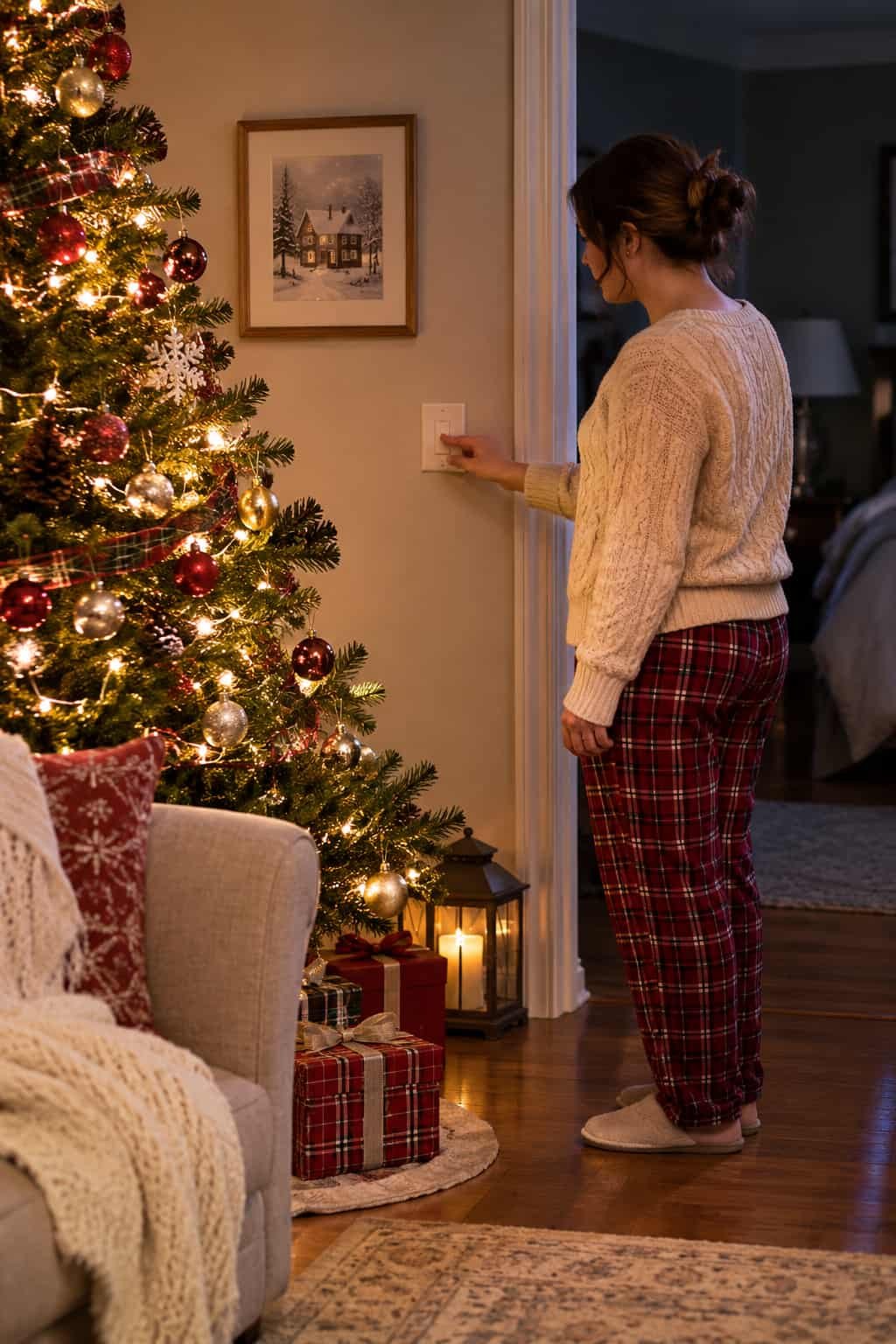
No, Christmas lights should not be left on overnight. The National Fire Protection Association (NFPA) recommends turning off Christmas tree lights and other light strings before bed or before leaving home. This advice applies even when you use LED lights. Switching them off reduces the time electrical decorations remain operating without anyone awake to notice a developing problem.
The important question is not simply whether your lights are LED or traditional. Their condition, intended use, electrical connections, placement, and the manufacturer’s instructions all matter.

Why Should You Turn Off Christmas Lights Before Going to Bed?
When everyone is asleep, a problem with an electrical decoration may go unnoticed for longer. A damaged wire, loose connection, or faulty light string can create an electrical or fire hazard.
The National Institute of Standards and Technology (NIST), citing NFPA recommendations, advises homeowners to turn off Christmas tree lights before leaving home or going to bed.
This is particularly important when lights are wrapped around a Christmas tree. Branches, ornaments, ribbons, and nearby household decorations can provide additional combustible material if a fire starts.
A real Christmas tree needs special attention. As it dries out, it can become more vulnerable to ignition. Keeping the tree watered helps maintain moisture in its branches and needles, but watering does not replace the need to switch off its lights at bedtime.
In other words, a well-maintained tree and good-quality lights are useful precautions, not reasons to leave the display running all night.
Does It Make a Difference Whether You Use LED or Incandescent Lights?
Yes, the bulb type matters, but it doesn’t change the basic overnight recommendation.
LED and incandescent Christmas lights work differently. LED lights generally use less electricity and produce less heat than traditional incandescent bulbs. This makes them a practical choice for many holiday decorating projects.
However, lower heat does not mean zero risk. LED strings still have electrical connections, wiring, plugs, and power supplies that can become damaged or faulty.
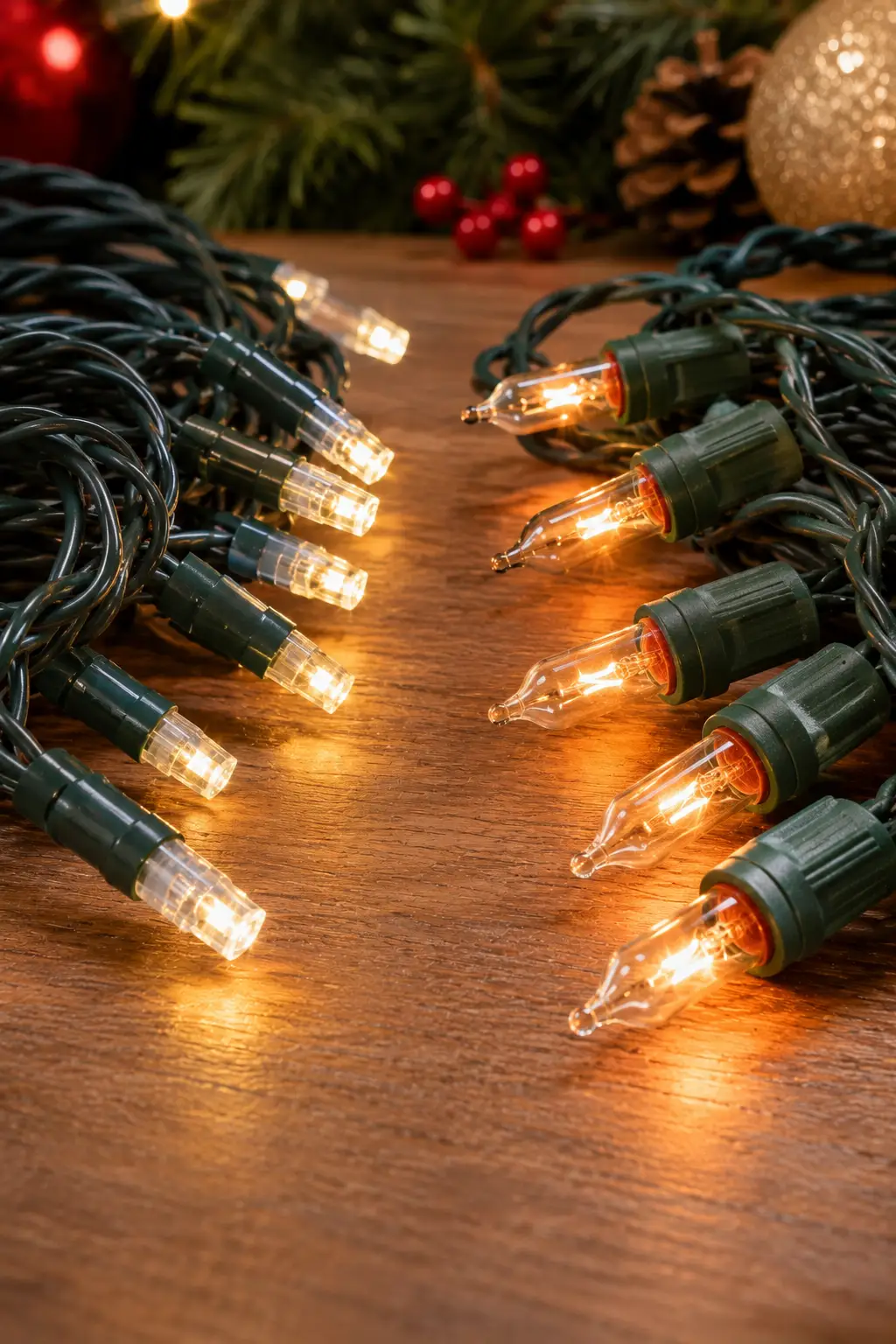
| Feature | LED Christmas Lights | Incandescent Christmas Lights |
| Energy consumption | Generally lower | Generally higher |
| Heat production | Generally lower | Generally higher |
| Bulb operation | Uses light-emitting diodes | Uses heated filaments |
| Overnight use | Switch off before bed | Switch off before bed |
For most households, LED lights are a sensible option because they use less energy and run cooler. But neither type is safe to leave running unattended overnight.
The Condition of Your Light Strings Matters More Than Their Appearance
A Christmas light display may look perfectly normal from across the room but still have a damaged connection or worn electrical cord.
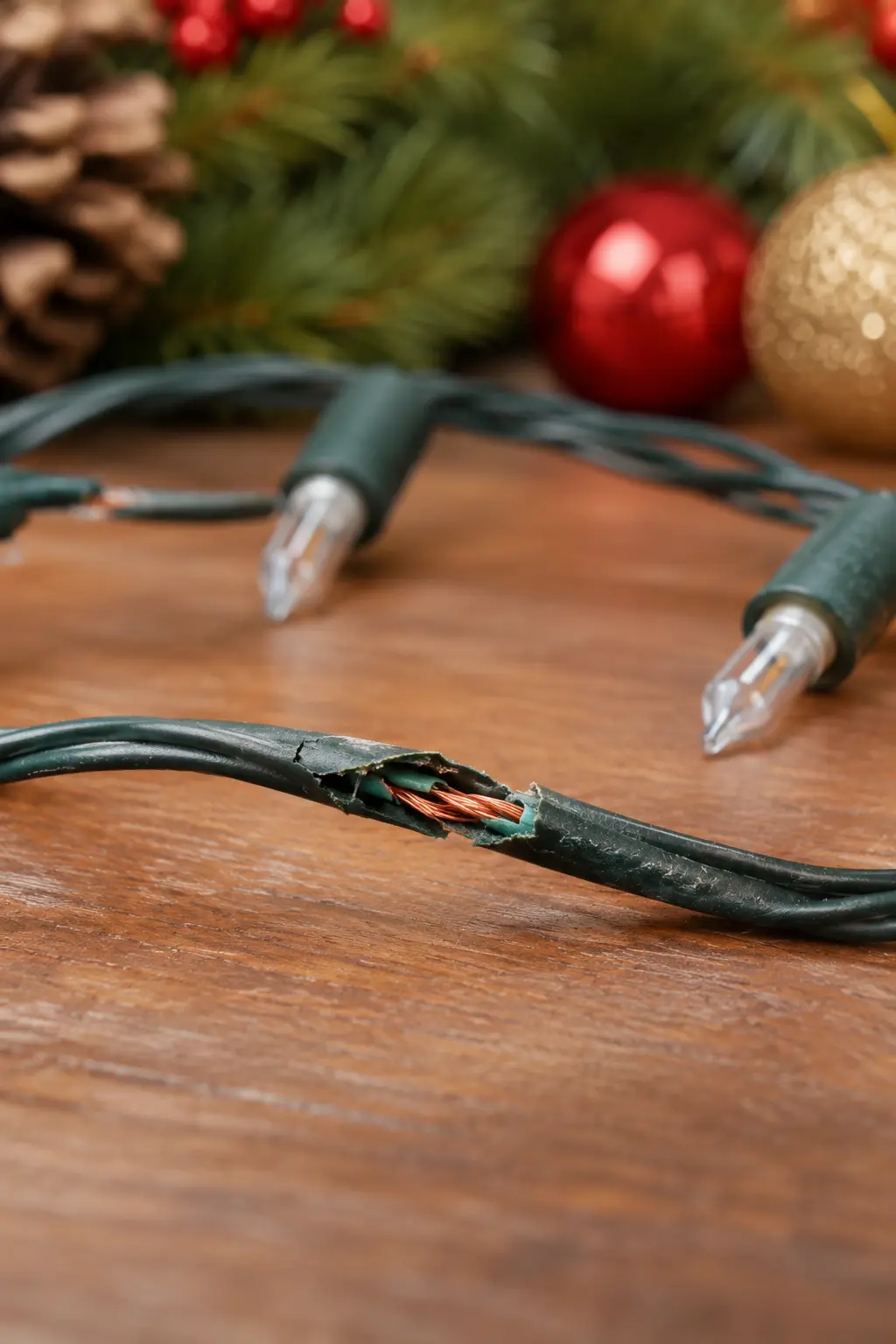
Before decorating, inspect each light string carefully. Check the plug, wire covering, bulb sockets, and connections between sections. Look for exposed wires, cracked sockets, loose bulbs, pinched cords, or signs of melting.
Do not use a light string with damaged wiring. Replacing it is safer than hiding the damage with decorations or continuing to use it because it still switches on.
The U.S. Consumer Product Safety Commission (CPSC) explains that seasonal lighting products without key electrical safety features can pose shock and fire hazards.
When purchasing replacement lights, look for products tested by a recognized safety testing organization, such as UL or Intertek, where applicable. Also check the manufacturer’s instructions rather than assuming all decorative lights have the same specifications.
Indoor and Outdoor Christmas Lights Need Different Considerations
Not every Christmas light string is designed for every location. A product intended for indoor use should not automatically be used outside, where it may be exposed to moisture, changing temperatures, and weather.
For an indoor Christmas tree or window display, choose lights specifically marked for indoor use. Keep plugs and connections away from water, and avoid placing electrical decorations where furniture can crush them, or doors can trap them.
Outdoor displays require additional care. Use lights and extension cords specifically rated for outdoor use. Connect outdoor electrical decorations to a ground-fault circuit interrupter (GFCI)-protected outlet or use suitable portable GFCI protection, following the applicable product instructions and local electrical requirements.
The CPSC provides guidance on checking outdoor lighting labels and using appropriate electrical protection. Its advice is particularly useful when decorating rooflines, balconies, gardens, and exterior walls.
One more detail matters: use appropriate clips to secure light strings instead of nails or staples that could damage their wiring.
Can You Use a Timer to Switch Christmas Lights Off Automatically?
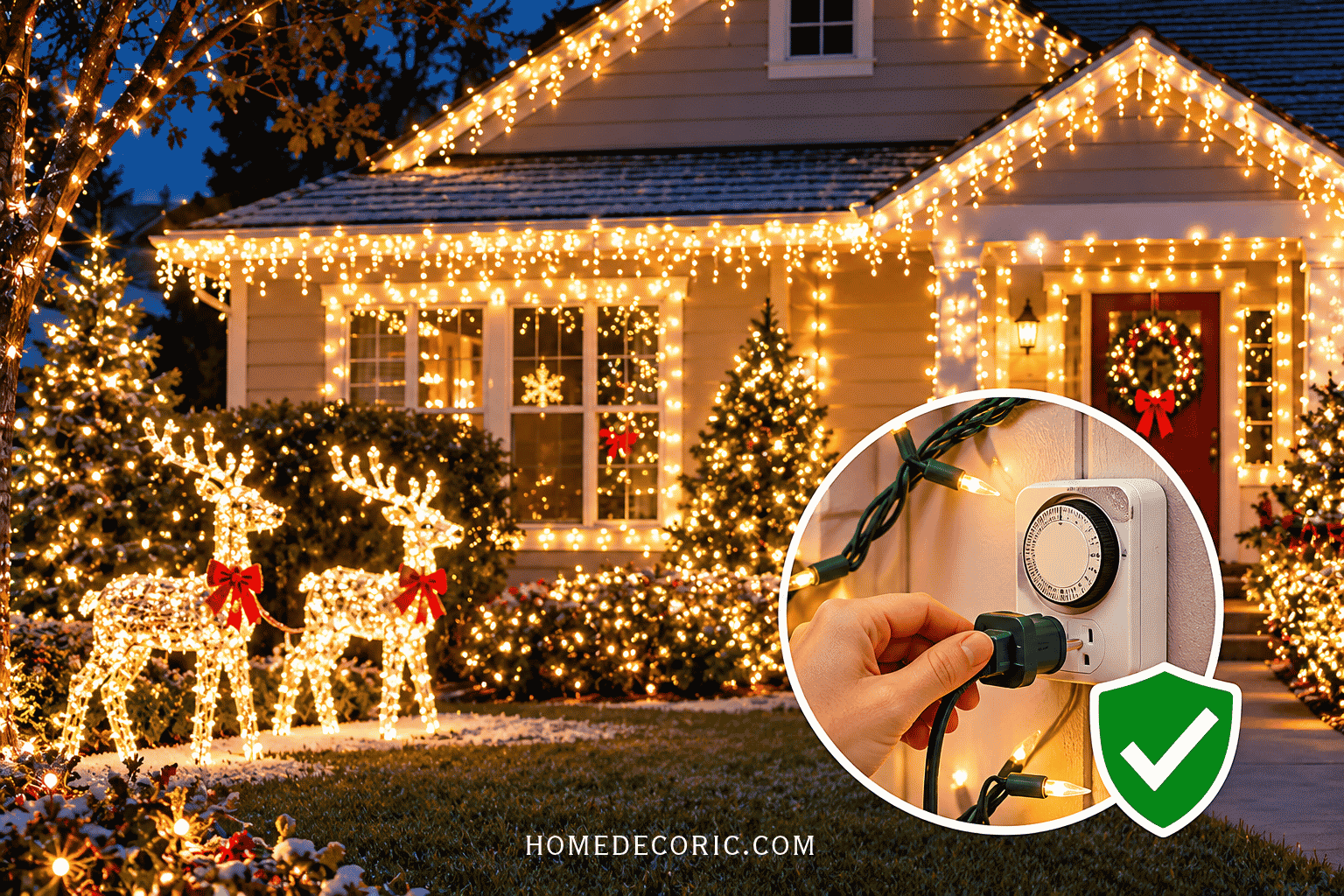
A timer can make holiday lighting easier to manage, especially if you often forget to switch off decorations before bed.
For example, you could arrange for your living-room Christmas lights to switch off at a set time in the evening. This gives you a convenient way to avoid leaving them running all night.
However, treat a timer as an automatic convenience, not a replacement for electrical safety checks. It does not repair damaged wires, prevent overloaded connections, or make an unsuitable light string safe.
If you use a plug-in timer or smart plug, check that it is compatible with the lights and rated for the electrical load. Follow the instructions for both products.
The most important point is to schedule the lights to turn off before bedtime, rather than using a timer to keep them on all night.
What About Extension Cords and Multiple Light Strings?
Extension cords can be useful when a Christmas display is positioned away from a wall outlet. Problems arise when cords are used incorrectly or when too many decorations are connected to the same electrical supply.
Avoid connecting extension cords together or plugging multiple power strips into one another. Do not run cords underneath rugs, across frequently used walkways, or through places where doors and furniture can pinch them.
Follow the manufacturer’s maximum connection limits for your light strings. Some products allow multiple strands to be connected, while others have different restrictions. No single safe number applies to every Christmas light set.
If an extension cord or plug becomes unusually warm, or you notice a burning smell, sparks, or flickering connections, stop using the setup and disconnect power if it is safe to do so. Have a qualified electrician investigate any suspected wiring or outlet problem.
Your Christmas Tree Needs Attention Too
The lights are only one part of Christmas tree safety. The tree’s location and condition also affect the overall setup.
Place a fresh-cut tree in a suitable stand with water and check it regularly. NIST explains that keeping a natural tree watered helps maintain moisture and can reduce its fire risk.
The NFPA also recommends keeping Christmas trees at least three feet away from heat sources such as fireplaces, radiators, candles, space heaters, and heat vents. Make sure the tree does not block a doorway or escape route.
If the tree becomes dry and starts dropping many needles, do not continue treating it as a normal decoration. Remove it from the home and dispose of it properly.
Use artificial trees according to their manufacturer’s instructions. Check that the lighting arrangement suits the tree and that electrical decorations are not damaged or placed near heat-producing equipment.
A Simple Before-Bed Christmas Lighting Routine
You do not need a complicated safety system every evening. A short routine can help make sure your decorations are switched off properly.
Before going to bed:
- Switch off all indoor and outdoor Christmas light displays.
- Unplug portable light strings where practical, following the product instructions.
- Check that extension cords and plugs are not damaged or unusually warm.
- Make sure no cords are trapped under rugs, furniture, or doors.
- Confirm that candles and other open flames have been extinguished.
- Keep your Christmas tree watered if it is a real tree.
A working smoke alarm is also an important part of general home fire safety.
Final Recommendation: Enjoy the Lights, Then Switch Them Off
Christmas lights make holiday decorating more enjoyable, but there is no good reason to keep them running while everyone is asleep.
Choose appropriate, well-maintained lighting, follow the manufacturer’s instructions, keep electrical connections in good condition, and switch off your decorations before bedtime.
LED lights can reduce energy use and heat production, but they don’t eliminate every electrical or fire risk.
A simple habit makes the difference: enjoy your Christmas display while you are awake, then turn it off before going to bed.