What Is the Best Time of Day to Water a Garden? (And How to Avoid Wasting Water)
If you’ve ever stood in your garden at noon, hose in hand, wondering whether you’re helping your plants or just running up your water bill, you’re not alone.
Watering timing is one of the simplest changes you can make for a healthier garden, and getting it right takes less effort than most people think. Here’s exactly when to water, why it matters, and how to avoid the most common mistakes.
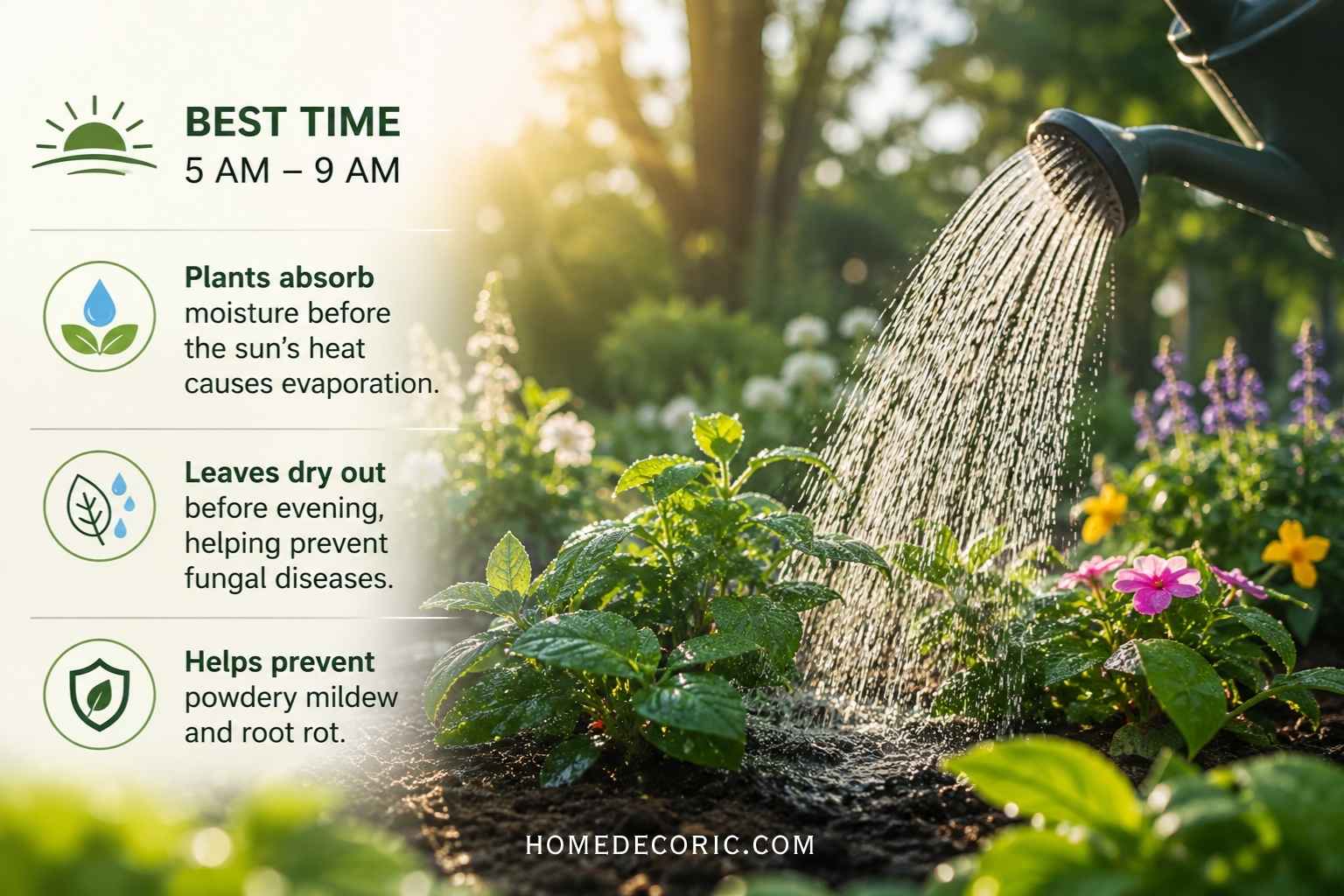
Quick answer: Water your garden in the early morning, between 5 AM and 9 AM. This gives plants time to absorb moisture before the heat of the day causes evaporation, and lets leaves dry before evening to reduce disease risk.
Why Morning Watering Works Best
The best time to water a garden is early morning, between 5 AM and 9 AM. Watering during these hours gives plants time to absorb moisture before the sun’s heat causes evaporation, and it allows leaves to dry out before evening, which helps prevent fungal diseases like powdery mildew and root rot.
- Less evaporation loss: Cooler morning temperatures and lower wind speeds mean more water reaches plant roots rather than evaporating from the soil surface.
- Stronger root absorption: Plants are most active in the morning, so they take up water and nutrients more efficiently before the heat of the day sets in.
- Reduced disease risk: Leaves that get wet in the morning have the rest of the day to dry. Wet foliage overnight creates the perfect environment for fungal growth.
- Lower water bills: Less water wasted to evaporation means you can water less often while keeping plants healthy.
According to UMD, watering during the heat of the day can increase water lost to evaporation by as much as 40%.
Is Evening Watering a Good Alternative?
Evening watering can work, but it carries more risk than morning watering. If mornings are not possible, watering in the early evening, around 4 PM to 6 PM, is the next best option, since temperatures are dropping and evaporation slows down.
- The downside: foliage that stays wet overnight is more prone to fungal diseases such as blight and mildew.
- If you must water in the evening, water at the base of the plant rather than overhead to keep leaves dry.
Why You Should Avoid Watering at Midday
Watering between 10 AM and 4 PM is the least effective time. During peak sun hours, a large portion of water evaporates before it ever reaches the roots, and droplets on leaves can act like tiny magnifying glasses, increasing the risk of leaf scorch.
How Often Should You Water Your Garden?
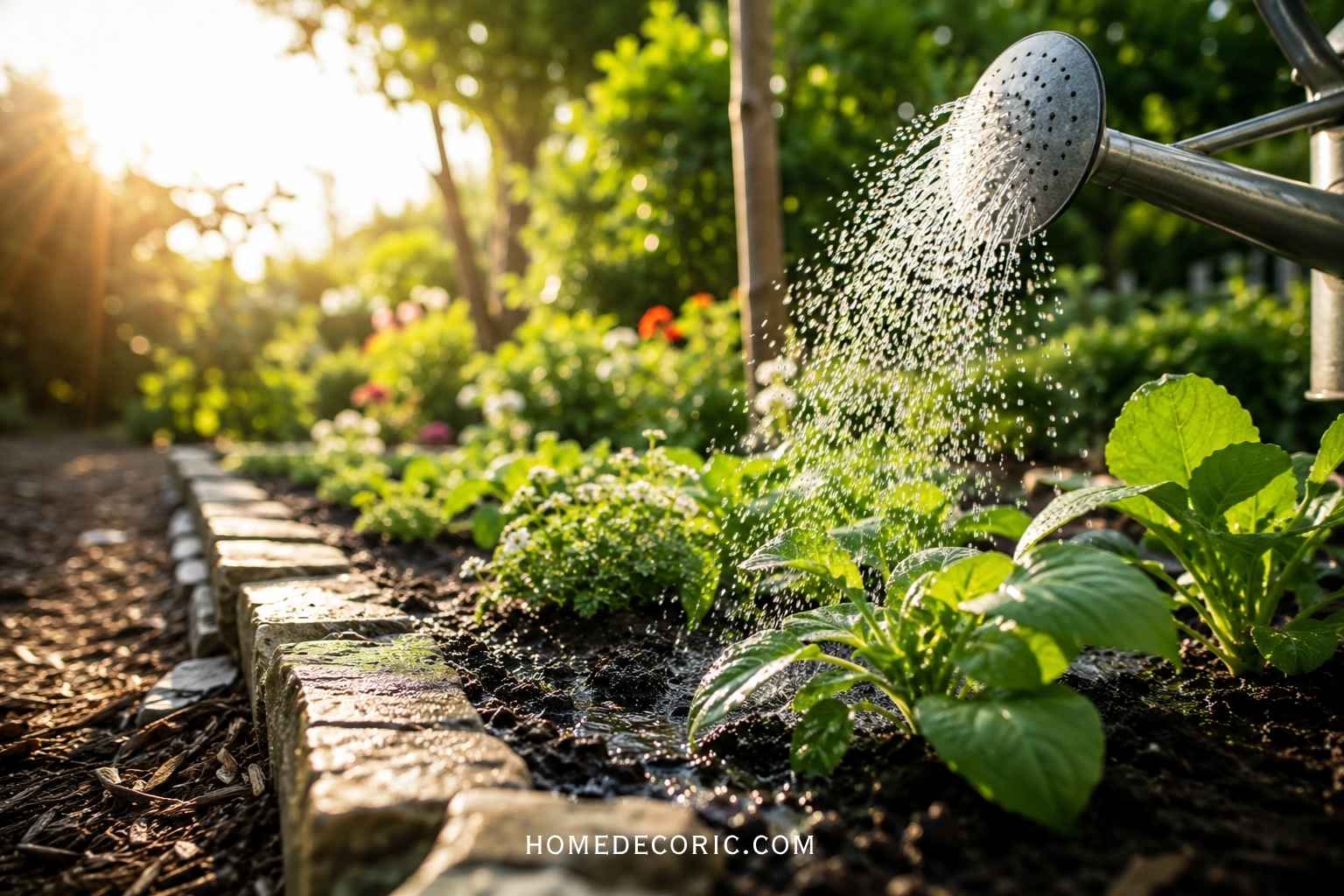
Most gardens need about 1 inch of water per week, whether from rainfall or irrigation, delivered in one or two deep waterings rather than frequent light sprinkles.
Deep, infrequent watering encourages roots to grow downward, making plants more drought-resistant.
How often you water depends on a few factors:
- Plant type: Vegetables and annuals often need water 2-3 times per week in warm weather. Established perennials, shrubs, and trees can often go a week or more between deep waterings.
- Soil type: Sandy soil drains fast and may need more frequent watering. Clay soil holds moisture longer and needs less frequent but deeper watering.
- Season: Increase frequency during hot, dry summer stretches. Reduce or stop supplemental watering during cooler, rainier months.
- Container vs. ground: Potted plants dry out faster than in-ground beds and may need daily watering in summer heat.
Bring Your Garden Inside, Too
Want more tips like this? At Home Decoric, we share simple, practical guides to help your garden and home thrive together.
Browse our latest gardening and outdoor living guides, and subscribe for weekly tips straight to your inbox.